
Introduction
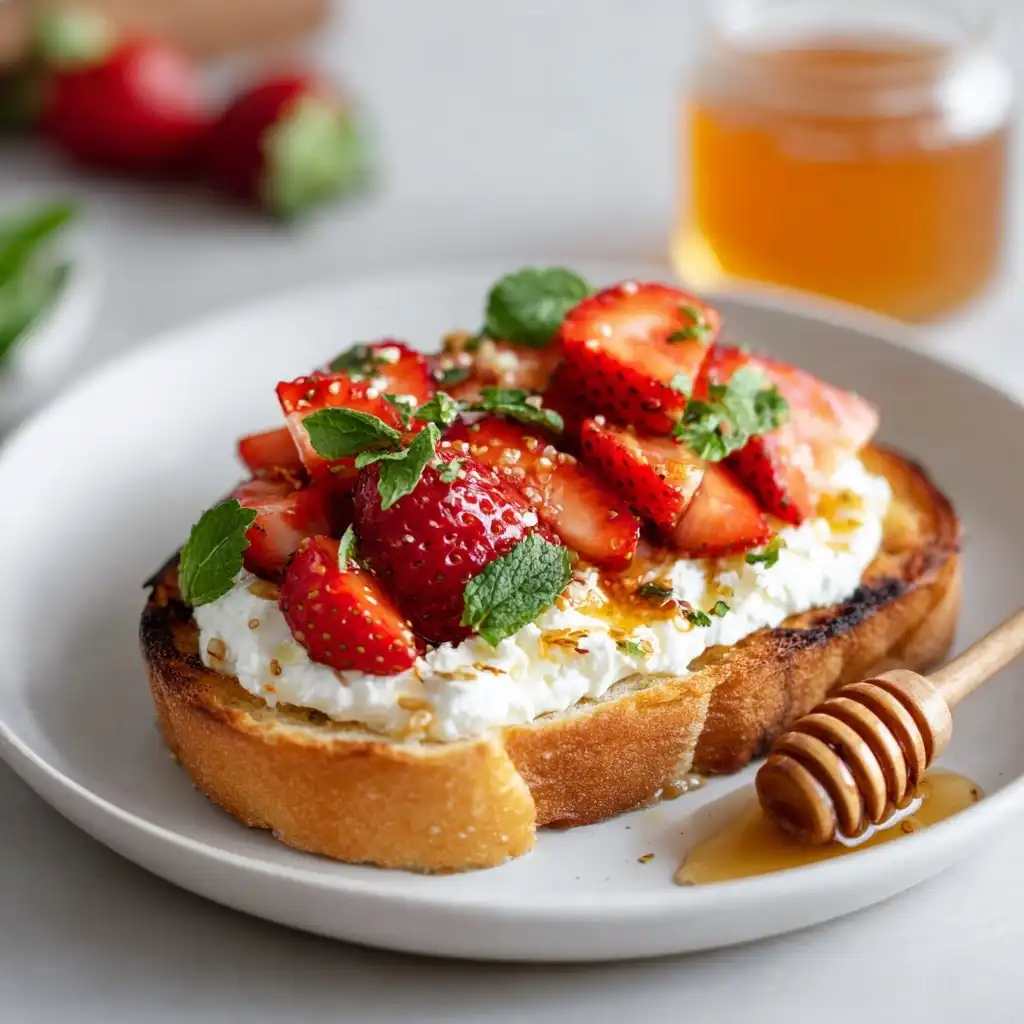
Whipped Ricotta Toast is a modern culinary delight that bridges the gap between rustic simplicity and elevated elegance. Far more than just a breakfast staple, it has evolved into a beloved brunch centerpiece, a sophisticated appetizer, and even a light yet satisfying lunch option. Its appeal lies in its remarkable versatility—equally at home on a sun-dappled café table or a carefully curated charcuterie board. At its heart, this dish celebrates minimalism: high-quality ricotta, toasted artisanal bread, and thoughtful, intentional toppings that highlight texture, contrast, and seasonal nuance. Unlike heavier spreads or overly sweet toasts, whipped ricotta offers airy lightness, subtle tang, and creamy richness—all without heaviness or cloying sweetness. It invites creativity while remaining deeply grounded in technique and ingredient integrity, making it accessible to beginners yet endlessly rewarding for seasoned cooks.
The History
Though whipped ricotta toast feels distinctly contemporary, its roots stretch across centuries and continents. Ricotta itself traces back to ancient Roman agrarian traditions, where it was born from the frugal, resourceful practice of reheating whey—the byproduct of cheese-making—to coagulate residual proteins. The word “ricotta” literally means “recooked” in Italian, underscoring its humble, circular origins. For generations, fresh ricotta was enjoyed simply—drizzled with honey, sprinkled with herbs, or spread on rustic country loaves. The “whipping” technique, however, is a relatively recent innovation driven by 21st-century food science and social media aesthetics. Chefs and home cooks alike began experimenting with aerating ricotta using stand mixers or hand blenders to achieve a cloud-like, mousse-like consistency—enhancing mouthfeel, improving spreadability, and creating a canvas primed for visual storytelling. Its rise to prominence accelerated around 2015–2017, fueled by Instagram’s emphasis on texture, contrast, and minimalist plating. Influential chefs like Alison Roman and publications such as Bon Appétit and Food & Wine helped codify its cultural moment, transforming it from a niche kitchen hack into a global pantry staple. Today, it represents a broader culinary ethos: honoring tradition through modern technique, valuing seasonality, and elevating everyday ingredients with intention and care.
Ingredients Breakdown
Every exceptional whipped ricotta toast begins not with quantity—but with quality, balance, and purpose. Below is an in-depth exploration of each core component and its functional role:
- Ricotta Cheese (Full-Fat, Fresh, and Drainable): Opt for high-quality, whole-milk, fresh ricotta—not shelf-stable or ultra-pasteurized varieties. Ideal ricotta should be moist but not watery, slightly granular yet cohesive, with a clean, milky-sweet aroma and a faint lactic tang. Brands like Calabro, Vermont Creamery, or locally sourced artisanal ricotta are preferred. Avoid pre-whipped or stabilized commercial versions—they often contain gums, thickeners, or excessive salt that compromise flavor and texture. If your ricotta is too wet, drain it in a fine-mesh sieve lined with cheesecloth over a bowl for 30–60 minutes in the refrigerator; this step is non-negotiable for achieving proper airiness and stability.
- Acid (Lemon Zest + Juice or High-Quality Vinegar): Acid is the secret conductor—it brightens, balances richness, and prevents the spread from tasting flat or cloying. Fresh lemon zest contributes aromatic oils and vibrant citrus perfume, while a small amount of freshly squeezed juice adds brightness without overwhelming acidity. Alternatives include high-grade white balsamic vinegar (for sweeter, rounded acidity) or sherry vinegar (for nutty depth), used sparingly and tasted incrementally.
- Seasoning (Fine Sea Salt & Freshly Cracked Black Pepper): Salt isn’t just for flavor enhancement—it’s essential for unlocking ricotta’s natural sweetness and amplifying its umami notes. Use flaky sea salt (like Maldon) or fine grey sea salt for even distribution. A whisper of freshly ground black pepper adds gentle warmth and complexity—especially effective when paired with savory or herbaceous toppings.
- Enrichment (Optional but Recommended): A small amount of neutral oil (grapeseed or light olive oil) or cultured butter (1–2 tsp per cup) adds silkiness, improves emulsification, and helps stabilize the whip. For vegan adaptations, cold-pressed avocado oil or refined coconut oil (unflavored) works well. Never use extra-virgin olive oil here unless intentionally pairing with Mediterranean flavors—the robust phenolics can dominate.
- Bread (Artisan Sourdough, Country Loaf, or Seeded Multigrain): The foundation must be sturdy enough to support the creamy spread without disintegrating, yet porous enough to absorb subtle toasting oils and develop deep Maillard complexity. Look for naturally leavened loaves with an open crumb, thick, caramelized crust, and moderate density. Day-old bread is ideal—it toasts more evenly and resists sogginess. Avoid soft sandwich bread, brioche (unless specifically enriched for dessert-style versions), or heavily sweetened loaves that clash with ricotta’s delicate profile.
- Toppings (Functional & Flavor-Forward Categories): Toppings aren’t mere garnish—they provide textural counterpoint (crunch vs. cream), temperature contrast (cool fruit vs. warm toast), fat balance (nut oils vs. dairy), and aromatic lift. Group them thoughtfully:
- Fruit-Based: Seasonal berries (macerated with a touch of sugar and mint), roasted stone fruits (peaches, plums, figs), poached pears, or citrus segments.
- Nut & Seed Elements: Toasted pistachios, crushed Marcona almonds, candied walnuts, sesame brittle, or pumpkin seed dukkah.
- Herbs & Greens: Microgreens, edible flowers (violets, nasturtiums), torn basil or mint, or delicate arugula for peppery bite.
- Savory Accents: Flaky sea salt, aged balsamic glaze, preserved lemon, roasted garlic confit, or thinly sliced radish.
- Sweet Enhancements (for dessert-leaning versions): Local wildflower honey, orange blossom water-infused syrup, crumbled amaretti cookies, or dark chocolate shavings (70%+).
Step-by-Step Recipe
- Prepare the Ricotta: Place 1 cup (250g) of drained, full-fat fresh ricotta in the bowl of a stand mixer fitted with the whisk attachment (or use a hand mixer with stainless steel whisks). Ensure all equipment is cold—chill the bowl and whisk for 10 minutes in the freezer for optimal aeration. Add ¼ tsp fine sea salt, ½ tsp finely grated lemon zest, and ½ tsp fresh lemon juice. Optional: 1 tsp cold-pressed grapeseed oil or ½ tbsp softened cultured butter.
- Whip to Perfection: Begin mixing on low speed for 30 seconds to combine. Gradually increase to medium-high and whip for 2–3 minutes—no longer—until the mixture becomes dramatically lighter in color, visibly increased in volume (by ~40%), and holds soft, billowy peaks when the whisk is lifted. It should resemble a delicate, ivory-hued mousse—not stiff, grainy, or broken. Over-whipping will cause separation and greasiness; if this occurs, fold in 1 tbsp chilled heavy cream or whole milk to restore cohesion.
- Rest and Chill: Transfer the whipped ricotta to an airtight container and refrigerate for at least 30 minutes (up to 24 hours). This allows flavors to meld, textures to settle, and the structure to firm slightly—making spreading easier and preventing slippage on toast.
- Toast the Bread: While the ricotta chills, preheat a heavy skillet (cast iron preferred), toaster oven, or standard oven to 375°F (190°C). Slice your chosen loaf into ¾-inch thick pieces. Lightly brush both sides with neutral oil or melted ghee (not EVOO—too low smoke point). Toast until deeply golden-brown and crisp—about 3–4 minutes per side in a skillet, or 8–12 minutes total in the oven, flipping halfway. For ultimate crunch and flavor, finish under the broiler for 30–60 seconds, watching closely.
- Assemble with Intention: Let toast cool slightly—warm (not hot) toast prevents melting the ricotta. Using an offset spatula or butter knife, generously spread 2–3 tbsp of chilled whipped ricotta per slice, smoothing gently but preserving airy texture—don’t press hard. Immediately add toppings in layers: start with softer elements (e.g., fruit or herbs), then crunch (nuts/seeds), then finishing accents (salt, drizzle, flowers). Serve within 5 minutes for peak contrast.
Tips
- Temperature Matters: Always whip ricotta cold—and keep it cold until serving. Warm ricotta collapses, weeps, and refuses to aerate properly. Chill your mixing bowl, whisk, and even the ricotta container for 15 minutes before beginning.
- Drain Relentlessly: Even “dry” ricotta often holds excess moisture. Don’t skip draining—even 20 minutes makes a dramatic difference in stability and fluff factor. Line your sieve with doubled cheesecloth or a clean linen napkin for maximum absorption.
- No Over-Mixing: Ricotta lacks the protein structure of egg whites or cream. Whip only until soft peaks form—typically 2 minutes max with a stand mixer. Err on the side of under-whipped; you can always whip 15 seconds more, but you cannot undo over-aeration.
- Bread Selection Is Strategic: Choose bread with structural integrity AND flavor depth. A dense rye may overwhelm; a flimsy baguette may buckle. Opt for naturally leavened sourdough with moderate hydration (70–75%)—it toasts evenly, crisps thoroughly, and offers subtle acidity that complements ricotta beautifully.
- Toast Timing Is Critical: Never spread ricotta on piping-hot toast—it melts and slides. Let it cool 1–2 minutes until just warm to the touch. Conversely, don’t wait too long—cold toast absorbs moisture and loses crunch.
- Layer Toppings Thoughtfully: Heavy items (roasted fruit, nuts) go first. Delicate items (microgreens, flowers, fresh herbs) go last—added just before serving to preserve vibrancy and prevent wilting or bruising.
- Taste As You Go: Ricotta varies widely in salt content and acidity. Always taste your base mixture before whipping—and adjust seasoning incrementally. Underseasoned ricotta tastes bland; oversalted ricotta cannot be rescued.
- Batch Prep Smartly: Whipped ricotta keeps well refrigerated for up to 3 days, but never freeze it—it separates irreversibly. Toast bread fresh daily, but you can par-toast slices and re-crisp in a 400°F oven for 3 minutes before serving.
- Embrace Texture Contrast: Every great version includes at least three distinct textures: creamy (ricotta), crunchy (toast + nuts/seeds), and juicy/crisp (fruit or veg). Missing one element weakens the overall experience.
- Season Your Toppings Too: A pinch of flaky salt on strawberries or a grind of black pepper on figs transforms them from garnish to integral flavor components.
Variations and Customizations
Whipped ricotta toast is infinitely adaptable—its genius lies in its chameleon-like ability to reflect regional ingredients, dietary needs, and personal taste. Below are meticulously crafted variations, each with distinct flavor architecture, technical notes, and pairing suggestions:
- Mediterranean Herb & Olive Oil: Fold 1 tbsp finely chopped fresh oregano, 1 tsp lemon zest, 1 minced garlic clove (raw for punch, roasted for sweetness), and 1 tsp high-quality Greek extra-virgin olive oil into the whipped ricotta. Top with Castelvetrano olives, crumbled feta, cherry tomatoes, and a final drizzle of EVOO and dried oregano. Best served with warm pita or za’atar-dusted focaccia.
- Maple-Roasted Pear & Walnut: Roast ripe Bosc or Anjou pears (halved, cored, brushed with maple syrup and cinnamon) at 400°F for 20–25 minutes until tender and caramelized. Cool, slice thinly. Whip ricotta with 1 tsp maple extract (not syrup—too liquid) and a pinch of cardamom. Top with pear slices, candied walnuts, micro arugula, and flaky salt. Pair with spiced chai or oat milk latte.
- Smoked Paprika & Roasted Red Pepper: Blend ¼ cup roasted red peppers (jarred or homemade, well-drained) with ricotta before whipping. Add ½ tsp smoked paprika (sweet or hot, to preference), 1 tsp sherry vinegar, and a pinch of cumin. Top with crumbled Manchego, pickled red onions, and fresh cilantro. Serve with grilled chorizo bites on the side.
- Vegan Whipped “Ricotta”: Substitute 1 cup raw cashews (soaked 4+ hours, drained) blended with ¼ cup unsweetened almond milk, 1 tbsp lemon juice, 1 tsp apple cider vinegar, ½ tsp white miso paste (for umami), ¼ tsp kala namak (black salt, for eggy sulfur notes), and ¼ tsp nutritional yeast. Whip until ultra-smooth and airy (4–5 minutes). Drain overnight in cheesecloth if needed. Top with grilled peaches, toasted pepitas, and basil oil.
- Dessert-Style Chocolate-Amaretti: Whip ricotta with 1 tbsp unsweetened cocoa powder, 1 tsp vanilla bean paste, and 1 tbsp powdered sugar (optional, depending on ricotta’s natural sweetness). Fold in 2 tbsp finely crushed amaretti cookies. Top with fresh raspberries, dark chocolate curls (72%), orange zest, and a light dusting of confectioners’ sugar. Serve with espresso or sparkling moscato.
- Umami Bomb (Savory Brunch): Incorporate 1 tsp white miso paste, ½ tsp tamari, and 1 finely grated shallot into the ricotta before whipping. Top with sautéed shiitake mushrooms, quick-pickled daikon, nori strips, scallion oil, and furikake. Excellent with matcha or cold brew.
- Spring Garden (Vegan-Friendly Option): Whip ricotta with 1 tbsp fresh pea purée (blanched, shocked, strained), 1 tsp chive oil, and lemon zest. Top with English peas (blanched), edible violets, toasted sunflower seeds, and lemon thyme. Naturally lower in fat and bright with chlorophyll-forward freshness.
- Spiced Chai-Scented: Infuse 2 tbsp warm whole milk with 1 chai tea bag for 5 minutes; cool completely. Use this milk in place of plain liquid when whipping. Add ¼ tsp ground ginger, ⅛ tsp ground cardamom, and a pinch of black pepper. Top with poached quince, crystallized ginger, and crushed pistachios.
Health Considerations and Nutritional Value
Whipped ricotta toast can be a nutrient-dense, balanced meal or snack—when approached mindfully. Below is a detailed nutritional and physiological analysis based on a standard serving (1 slice of 2-oz sourdough, ¼ cup whipped ricotta, 1 tbsp toasted almonds, ½ cup mixed berries):
- Macronutrient Profile (Approx. 380–420 kcal): Provides ~18–22g high-quality protein (ricotta + bread + nuts), 12–15g healthy fats (mostly monounsaturated from nuts/oil and saturated from dairy), and 45–55g complex carbohydrates (fiber-rich whole-grain bread + fruit). The ratio supports satiety, steady blood sugar, and sustained energy—ideal for morning or midday fuel.
- Dairy Considerations: Ricotta is naturally lower in lactose than many cheeses due to its whey-based origin—making it more tolerable for many with mild lactose sensitivity. For those avoiding dairy entirely, the cashew-based vegan version delivers comparable protein and healthy fats without cholesterol or animal hormones.
- Sodium Awareness: Traditional ricotta contains ~50–90mg sodium per ½ cup. Whipping adds minimal salt—typically 60–120mg total per serving—well within WHO daily limits (<2,000mg). However, flavored salts, cured meats, or salty toppings (anchovies, capers) can quickly escalate intake. Opt for flaky sea salt applied consciously—not mixed in.
- Fiber & Gut Health: A well-chosen whole-grain or seeded sourdough contributes 4–6g of prebiotic fiber per slice, feeding beneficial gut bacteria. Berries add polyphenols and additional fiber (3–4g per ½ cup), while herbs and edible flowers introduce diverse phytonutrients and antioxidants.
- Vitamin & Mineral Highlights: Ricotta is rich in calcium (20% DV), selenium (15% DV), and vitamin B12 (25% DV). Berries contribute vitamin C and anthocyanins; nuts supply vitamin E and magnesium; lemon zest offers limonene and bioflavonoids. Together, they form a synergistic antioxidant network.
- Glycemic Impact: When built on low-GI bread (sourdough’s natural fermentation lowers glycemic load) and topped with whole fruit (not syrup or jam), this dish maintains a low-to-moderate glycemic index (~45–55), supporting insulin sensitivity—particularly valuable for prediabetic or metabolic health goals.
- Allergen Notes: Naturally gluten-free ricotta requires gluten-free bread for full adaptation. Nut toppings can be substituted with seeds (pumpkin, sunflower) for nut allergies. Always verify ricotta is made in a dedicated facility if dairy allergy (not intolerance) is present.
- Portion Mindfulness: While nutrient-rich, caloric density increases with added oils, nuts, honey, or chocolate. Practice mindful portioning: limit nuts to 1 tbsp, drizzles to ½ tsp, and sweeteners to <1 tsp per serving unless intentionally dessert-focused.
Ingredients
- 1 cup (250g) full-fat, fresh, high-quality ricotta cheese (preferably local or artisanal)
- ¼ teaspoon fine sea salt (adjust to taste)
- ½ teaspoon finely grated lemon zest (from ½ organic lemon)
- ½ teaspoon fresh lemon juice (from same lemon)
- 1 teaspoon cold-pressed grapeseed oil or ½ tablespoon softened cultured butter (optional, for silkiness)
- 4 thick slices (¾-inch) naturally leavened sourdough or seeded multigrain bread (about 2 oz each)
- 1 tablespoon neutral oil (grapeseed, avocado, or light olive oil) for toasting
- Assorted seasonal toppings (see Variations section for ideas—e.g., fresh berries, toasted pistachios, microgreens, flaky salt, honey)
Directions
- In a fine-mesh sieve lined with cheesecloth or a clean linen napkin, place the ricotta. Set over a bowl and refrigerate for 30–60 minutes to remove excess whey. Discard liquid.
- Chill the bowl of a stand mixer and whisk attachment in the freezer for 10 minutes.
- Add drained ricotta, sea salt, lemon zest, lemon juice, and optional oil or butter to the chilled bowl.
- Using a stand mixer with the whisk attachment (or hand mixer), begin mixing on low for 30 seconds to combine. Increase to medium-high and whip for 2–2.5 minutes, until mixture is pale, voluminous, and holds soft peaks. Do not overmix.
- Transfer to an airtight container and refrigerate for at least 30 minutes (up to 24 hours).
- Preheat oven or toaster oven to 375°F (190°C). Brush both sides of bread slices lightly with neutral oil.
- Toast bread on a baking sheet or in a skillet over medium heat until deeply golden and crisp—approximately 3–4 minutes per side in a pan, or 8–12 minutes total in the oven, flipping halfway. For extra crunch, broil for 30–60 seconds at the end.
- Let toast cool 1–2 minutes until warm—not hot—to the touch.
- Using an offset spatula, spread 2–3 tablespoons of chilled whipped ricotta evenly onto each slice.
- Immediately layer on desired toppings in thoughtful sequence: base (soft fruit or roasted veg), crunch (nuts/seeds), garnish (herbs/flowers/salt/drizzle).
- Serve immediately for optimal textural contrast and freshness.
FAQ
- Can I make whipped ricotta ahead of time?
- Yes—whipped ricotta stores beautifully in an airtight container in the refrigerator for up to 3 days. Stir gently before using if slight separation occurs. Do not freeze.
- Why does my whipped ricotta look grainy or curdled?
- Most commonly caused by using low-fat or ultra-pasteurized ricotta (which lacks structure), skipping the draining step (excess water breaks emulsion), or over-whipping. Always use full-fat, fresh, drained ricotta—and stop mixing at soft peaks.
- What if I don’t have a stand mixer?
- A hand mixer works perfectly—just ensure the beaters are cold and use a deep, narrow bowl to prevent splatter. A balloon whisk and strong arm can also achieve airy texture with vigorous, vertical motion for 4–5 minutes (though less consistent).
- Is there a dairy-free alternative that mimics the texture?
- Absolutely. Soaked raw cashews blended with lemon, miso, and plant milk—then whipped—offer near-identical creaminess and tang. Almond or macadamia nut bases also work, but cashews yield the smoothest, most neutral result.
- Can I toast the bread in advance?
- You can par-toast bread (to 80% crispness) and store uncovered at room temperature for up to 24 hours. Re-crisp in a 400°F oven for 3–4 minutes before assembling. Fully cooled, fully toasted bread becomes stale and won’t hold the ricotta well.
- My ricotta tastes bland—how do I fix it?
- Ricotta is a blank canvas—its flavor depends entirely on seasoning. Always taste before and after whipping. Add salt gradually, along with acid (lemon/vinegar) and aromatics (zest, herbs, spices). Underseasoned ricotta is the #1 cause of “bland” results.
- What’s the best bread for gluten-free versions?
- Look for dense, naturally fermented gluten-free sourdoughs made with teff, buckwheat, or brown rice flour—these toast better than starchy, gum-heavy loaves. Brands like Bread SRSLY or Measure Me Gluten Free perform exceptionally well.
- Can I add sweetener to the whipped ricotta?
- Only if building a dessert version—and use sparingly. ½–1 tsp powdered sugar or maple sugar dissolves cleanly. Liquid sweeteners (honey, syrup) destabilize the foam. Better to sweeten toppings (e.g., macerated fruit) instead.
- How do I prevent the ricotta from sliding off the toast?
- Three keys: (1) Use adequately drained ricotta, (2) Toast bread until deeply crisp and dry on the surface, and (3) Spread while toast is warm—not hot—to encourage slight adhesion without melting.
- Is whipped ricotta suitable for kids or picky eaters?
- Yes—it’s mild, creamy, and highly customizable. Try pairing with familiar favorites: blueberries and granola, banana slices and peanut butter drizzle, or roasted apples and cinnamon. Its neutral base makes it an ideal vehicle for introducing new flavors and textures.
Summary
Whipped Ricotta Toast is a masterclass in minimalist luxury—transforming humble, ancient ingredients through precise technique, seasonal reverence, and intentional contrast into a dish that satisfies nutritionally, aesthetically, and emotionally.
Whether served at dawn with heirloom tomatoes and basil or at dusk with roasted figs and aged balsamic, it remains a timeless expression of balance: creamy and crisp, rich and bright, simple in execution yet profound in possibility.