
Introduction
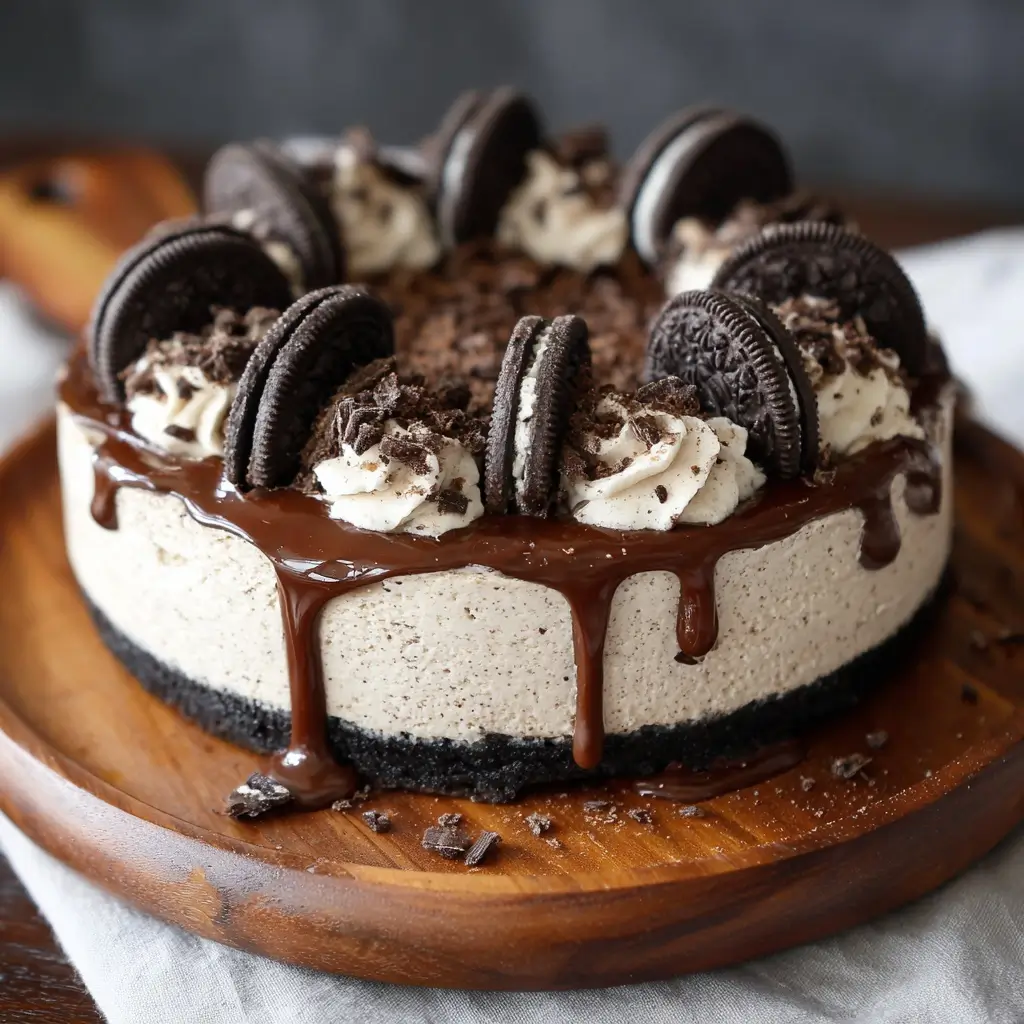
Welcome to the ultimate guide to No-Bake Oreo Cheesecake—a decadent, creamy, and effortlessly elegant dessert that delivers all the rich, nostalgic flavor of classic cheesecake without a single minute in the oven. This beloved no-bake treat is a staple at summer barbecues, holiday gatherings, potlucks, and lazy Sunday afternoons alike. Its velvety smooth filling, crisp chocolatey crust, and signature Oreo swirls make it irresistibly indulgent—yet remarkably simple to prepare. Whether you’re a seasoned home baker or a complete beginner, this recipe promises foolproof results, stunning presentation, and crowd-pleasing satisfaction every time. No water bath, no cracked surfaces, no timing anxiety—just pure, chilled, dreamy cheesecake magic.
The History
The origins of no-bake cheesecake trace back to mid-20th-century American home cooking, when convenience foods like cream cheese, whipped topping, and pre-packaged cookies began reshaping dessert culture. While traditional baked cheesecake has roots stretching back to ancient Greece and evolved through European traditions (notably New York–style in the 1920s), the no-bake version surged in popularity during the 1950s and ’60s alongside the rise of refrigerated desserts and Jell-O-based “molded” treats. The Oreo cookie—introduced by Nabisco in 1912—didn’t become a cheesecake staple until the 1970s and ’80s, as home cooks discovered its perfect synergy with cream cheese: the bittersweet cocoa notes balancing the tangy richness, while the crunchy wafer added textural contrast and structural integrity to the crust. By the 1990s, no-bake Oreo cheesecake appeared regularly in community cookbooks, magazine features (including Betty Crocker and Good Housekeeping), and early food blogs. Today, it’s a viral sensation on Pinterest, TikTok, and Instagram—often styled with dramatic Oreo-stuffed layers, glossy ganache drizzles, edible glitter, and over-the-top garnishes—proving that simplicity, nostalgia, and smart technique can create something timeless and trend-proof.
Ingredients Breakdown
Understanding each ingredient’s role ensures consistent success—and opens the door for confident customization. Here’s an in-depth look at what makes this no-bake Oreo cheesecake so reliably luscious:
- Full-Fat Cream Cheese (16 oz / 454 g): The foundation of flavor and texture. Must be at room temperature (65–70°F) for seamless blending—cold cream cheese causes lumps; overheated or softened-too-long cheese leads to weeping or graininess. Block-style (not spreadable tubs) delivers optimal density and tang.
- Granulated Sugar (¾ cup / 150 g): Provides sweetness, aids in stabilizing the emulsion, and contributes to a smooth, non-gritty mouthfeel. Adjust downward slightly (to ⅔ cup) if using extra-sweet fillings or toppings.
- Heavy Whipping Cream (1 ¼ cups / 300 ml, cold): Adds luxurious richness and enables proper whipping volume. Fat content (≥36%) is non-negotiable—low-fat or ultra-pasteurized creams often fail to whip or stabilize.
- Unflavored Gelatin (2 ¼ tsp / 7 g, ~1 packet): The silent hero. Bloomed properly, it provides essential structure, prevents weeping during thawing or serving, and gives the filling its signature “sliceable” firmness without rubberiness. Do not substitute agar-agar unless adjusting ratios and technique.
- Cold Water (3 tbsp / 45 ml) for blooming gelatin: Must be cold—not warm or hot—to prevent premature activation and clumping.
- Pure Vanilla Extract (2 tsp): Enhances depth and rounds out dairy tang. Avoid imitation vanilla—it introduces off-notes that clash with Oreo’s malted-chocolate profile.
- Pinch of Fine Sea Salt (⅛ tsp): A crucial flavor amplifier that balances sweetness and highlights the cocoa and cream cheese nuances.
- Oreo Cookies (36 standard cookies, ~300 g total): Divided into two functional categories: 24 cookies for the crust (crushed finely, including filling), and 12 cookies reserved for decoration/filling swirls (coarsely chopped or halved). Use original Oreos—not Double Stuf, Golden, or seasonal variants—for authentic flavor balance. Gluten-free Oreos work well for adaptations (see Variations section).
- Unsalted Butter (6 tbsp / 85 g, melted): Binds the crust, adds sheen and richness, and helps achieve a firm, clean snap when sliced. Clarified butter may be used for deeper nuttiness and higher melt resistance.
Note: All ingredients should be measured by weight when possible—especially flour-like items such as crushed Oreos—for precision and reproducibility.
Step-by-Step Recipe
- Prepare the Crust (20 minutes + chilling): Pulse 24 Oreos (filling included) in a food processor until fine, sandy crumbs form—about 30 seconds. Transfer to a medium bowl; stir in melted butter until evenly moistened and clumping when squeezed. Press firmly and evenly into the bottom and 1 inch up the sides of a 9-inch springform pan using the back of a measuring cup or flat-bottomed glass. Chill uncovered for at least 45 minutes—or preferably 2 hours—to fully set and prevent slippage during filling.
- Bloom the Gelatin (5 minutes): In a small heatproof bowl, sprinkle gelatin over cold water. Let sit undisturbed for 5 minutes until it becomes opaque, spongy, and doubled in volume (“bloomed”). Do not stir prematurely.
- Warm & Dissolve Gelatin (2 minutes): Gently microwave bloomed gelatin in 15-second intervals, stirring between bursts, until fully liquefied and clear—usually 30–45 seconds total. Set aside to cool slightly (should feel warm but not hot to touch—≈100°F/38°C). Overheating denatures gelatin and weakens set.
- Beat Cream Cheese Base (4 minutes): In a large stand mixer fitted with the paddle attachment (or using a hand mixer), beat room-temperature cream cheese and sugar on medium speed for 2–3 minutes until completely smooth, pale, and airy—scraping bowl and paddle frequently. Add vanilla and salt; mix 30 seconds more.
- Incorporate Gelatin (1 minute): With mixer on low, slowly drizzle in warm gelatin mixture. Beat just until fully incorporated—do not overmix. Pause to scrape bowl. Mixture will appear slightly glossy and cohesive.
- Whip the Cream (3–4 minutes): In a separate chilled bowl, whip cold heavy cream on medium-high until soft peaks form—about 2–3 minutes. Increase speed to high and whip to stiff (but not dry or grainy) peaks—another 30–60 seconds. Fold one-third of whipped cream into cream cheese mixture with a silicone spatula using gentle, sweeping motions from bottom to top to lighten. Then gently fold in remaining cream in two additions until no white streaks remain and batter is uniform, airy, and holds gentle ribbons.
- Layer & Swirl (3 minutes): Pour filling over chilled crust, smoothing top with an offset spatula. Coarsely chop 6 reserved Oreos (leave some chunks ¼–½ inch). Sprinkle evenly over surface. Using a thin knife or skewer, gently drag through filling in figure-eights or concentric circles to create marbled swirls—do not over-swirl or you’ll lose definition. Top with remaining 6 Oreos, broken or placed whole for visual impact.
- Chill to Set (Minimum 12 hours, ideally 24): Cover pan loosely with plastic wrap (avoid touching surface) and refrigerate for at least 12 hours—but 24 hours yields superior sliceability, cleaner edges, and fully developed flavor. Do not freeze unless planning long-term storage (see Variations).
- Unmold & Serve (5 minutes): Run a thin, flexible knife around inner edge of pan to loosen. Release springform clasp and carefully lift off the outer ring. Slide a large offset spatula or pancake turner under crust to lift onto a cake stand or serving platter. For clean slices, dip knife in hot water and wipe dry between cuts. Serve chilled—not cold straight from freezer unless specified.
Tips
- Temperature Is Everything: Room-temp cream cheese and cold heavy cream are non-negotiable. If cream cheese feels cool or resists beating, let it sit 15–20 minutes longer. If cream is too warm (>55°F), chill bowl and whisk/beaters for 10 minutes prior.
- Crumb Consistency Matters: For the crust, aim for fine sand—not coarse gravel or dusty powder. Too coarse = crumbly crust; too fine = dense, greasy base. Pulse, don’t blitz.
- Gelatin Discipline: Never add hot gelatin directly to cold filling—it causes uneven setting and potential lumps. Always cool to ~100°F before mixing in. If gelatin begins to set before use, gently re-warm in microwave (5 sec bursts).
- Folding Technique: Use a silicone spatula and cut-and-fold motion—not stirring or beating. Over-folding deflates air and yields dense, gummy texture. Stop as soon as batter is homogenous.
- Slice Like a Pro: Use a long, thin-bladed knife (e.g., chef’s or boning knife), dipped in near-boiling water and wiped *completely* dry before each cut. Wipe again after each slice for pristine edges.
- Prevent Condensation: To avoid a wet top layer, refrigerate uncovered for first 2 hours, then cover loosely. Never seal tightly until fully set—trapped moisture creates fogging and surface weeping.
- Springform Pan Prep: Line the *bottom* with parchment paper for guaranteed release—even with perfect chilling. Wrap the *outside* of the pan base in double-layer foil if storing or transporting to prevent leaks.
- Flavor Infusion Options: Steep 1 tsp espresso powder or ¼ tsp cinnamon into warm gelatin liquid for subtle complexity. Or add 1 tbsp crème de cacao to whipped cream for adult variation.
- Storage Lifespan: Keeps impeccably for 5 days refrigerated (covered), 3 months frozen (see Variations). Always store on a tray or plate—never stack other items on top.
- Rescue a Weepy Cheesecake: If surface appears damp after unmolding, gently pat with paper towel, then re-chill 30 minutes uncovered. A light dusting of cocoa or crushed Oreos masks minor imperfections beautifully.
Variations and Customizations
This versatile canvas invites endless creativity—whether adapting for dietary needs, seasonal themes, or personal cravings. Each variation includes specific adjustments and pro tips for optimal execution:
- Gluten-Free Version: Use certified GF Oreos (like Kinnikinnick or Nabisco’s GF line) and verify all other ingredients (vanilla, gelatin—some brands use wheat-derived alcohol). Crust may require 1 extra tbsp melted butter for cohesion due to different starch profiles.
- Vegan Adaptation: Substitute full-fat coconut cream (chilled overnight, solid portion only) for heavy cream; use vegan cream cheese (e.g., Kite Hill or Miyoko’s); replace gelatin with 1 tbsp agar-agar powder bloomed in ¼ cup plant milk and boiled 2 min. Add 1 tsp apple cider vinegar for tang. Chill 18+ hours—agar sets firmer and faster.
- Low-Sugar / Keto-Friendly: Swap granulated sugar for ⅔ cup erythritol-monk fruit blend (e.g., Lakanto Golden); use keto-friendly chocolate sandwich cookies (e.g., Catalina Crunch or HighKey); increase gelatin to 2 ½ tsp for stability. Note: texture may be slightly less creamy; add 1 tsp xanthan gum to filling if needed.
- Freezer-Friendly Make-Ahead: Fully set cheesecake (unmolded) can be flash-frozen uncovered for 2 hours, then wrapped tightly in plastic + foil and stored up to 3 months. Thaw overnight in fridge—do not microwave or counter-thaw. Texture remains nearly identical.
- Mini Individual Portions: Press crust into 12 lined muffin tin cups. Fill ¾ full with batter. Swirl in 1–2 mini Oreo pieces per cup. Chill 8 hours. Unmold by gently pushing up from bottom liner. Perfect for parties and portion control.
- Seasonal Twists:
- Pumpkin Spice: Add ½ cup canned pumpkin purée (well-drained) + 1 tsp pumpkin pie spice to cream cheese mixture.
- Mint Chocolate: Replace 1 tsp vanilla with ¼ tsp peppermint extract + 2 tbsp crushed Andes mints folded in with Oreos.
- Strawberry Swirl: Swirl in ⅓ cup seedless strawberry jam (simmered 2 min to thicken) before final Oreo topping.
- Elevated Garnishes: Drizzle with dark chocolate ganache (½ cup heated cream + 4 oz chopped 70% chocolate), sprinkle with flaky sea salt, top with fresh raspberries or edible flowers, or rim the pan edge with crushed Oreos + gold luster dust.
- “Blackout” Ultra-Chocolate Version: Mix 3 tbsp unsweetened cocoa powder into crust crumbs; fold ¼ cup melted dark chocolate (cooled to 90°F) into filling before adding whipped cream; garnish with chocolate curls.
- Protein-Packed Boost: Add 2 scoops unflavored or chocolate collagen peptides or whey isolate to cream cheese mixture before gelatin. Ensure powder is fully dissolved to avoid grittiness.
- Alcohol-Infused (21+): Stir 2 tbsp bourbon, Kahlúa, or Godiva Chocolate Liqueur into cream cheese base. Reduce sugar by 1 tbsp to balance added sweetness.
Health Considerations and Nutritional Value
A 12-slice No-Bake Oreo Cheesecake offers approximately 385–420 calories per serving, depending on Oreo count and butter ratio. Macronutrient breakdown (per standard slice): ~24–28g total fat (14–16g saturated), ~38–42g carbohydrates (28–32g sugars, primarily from Oreos and added sugar), ~5–6g protein, and ~180–220mg sodium. While undeniably indulgent, mindful preparation and context elevate its place in balanced eating:
- Cream Cheese Benefits: Contains calcium, vitamin A, and probiotics (in some live-culture brands), supporting bone health and gut microbiome diversity when consumed regularly in moderation.
- Oreo Nuance: Standard Oreos contribute refined carbs and added sugars—but their cocoa content offers trace flavonoids. Choosing reduced-sugar or whole-grain versions lowers glycemic load without sacrificing structure.
- Gelatin Advantage: A natural source of glycine and collagen peptides, which support joint health, skin elasticity, and digestive lining integrity—especially valuable in no-bake formats where gelatin is central to texture.
- Portion Mindfulness: Serving size matters. Using a 10-inch pan yields 16 thinner slices (~320 cal), making it easier to enjoy guilt-free. Pair with fresh berries or a light green salad to balance richness.
- Allergen Awareness: Contains dairy, gluten (unless adapted), soy (in most Oreos), and eggs (in some cream cheeses—always check labels). Vegan/gf versions eliminate key allergens safely.
- Not a “Health Food”—But Not Off-Limits: Dessert psychology matters. Depriving often backfires; savoring a well-made, intentional slice fosters satisfaction and reduces binge-risk. Think of it as celebratory nourishment—not daily fuel.
- For Diabetics: Consult a dietitian before consuming. Low-sugar versions with approved sweeteners and precise carb counting (≈22g net carbs/slice) can fit within meal plans when paired with protein/fiber.
Always prioritize whole-food accompaniments: serve with a side of Greek yogurt, mixed nuts, or seasonal fruit compote to round out nutrition and satiety.
Ingredients
- 24 standard Oreo cookies (for crust), plus 12 additional for swirls and garnish
- 6 tablespoons (85 g) unsalted butter, melted and cooled slightly
- 16 ounces (454 g) full-fat brick-style cream cheese, at room temperature
- ¾ cup (150 g) granulated sugar
- 2 teaspoons pure vanilla extract
- ⅛ teaspoon fine sea salt
- 2 ¼ teaspoons (7 g) unflavored powdered gelatin
- 3 tablespoons (45 ml) cold water
- 1 ¼ cups (300 ml) cold heavy whipping cream (≥36% fat)
Directions
- Grease a 9-inch springform pan and line the bottom with parchment paper. Set aside.
- In a food processor, pulse 24 Oreos (filling included) until fine, sandy crumbs form—about 30 seconds. Transfer to a bowl and stir in melted butter until evenly moistened. Press mixture firmly into bottom and 1 inch up sides of prepared pan. Refrigerate uncovered for at least 45 minutes (or up to 2 days).
- In a small heatproof bowl, sprinkle gelatin over cold water. Let bloom 5 minutes until spongy and doubled.
- Microwave bloomed gelatin in 15-second bursts, stirring between, until fully liquefied and clear (~30–45 sec). Let cool to warm (≈100°F)—do not let harden.
- In a large stand mixer with paddle attachment, beat cream cheese and sugar on medium 2–3 minutes until smooth and fluffy. Scrape bowl. Add vanilla and salt; mix 30 seconds.
- With mixer on low, slowly drizzle in warm gelatin. Mix just until combined—do not overbeat.
- In a separate chilled bowl, whip cold heavy cream to stiff peaks (3–4 minutes total). Fold one-third into cream cheese mixture to lighten. Gently fold in remaining whipped cream in two additions until uniform and airy.
- Pour filling over chilled crust. Smooth top. Coarsely chop 6 Oreos and scatter over surface. Swirl gently with a knife. Top with remaining 6 Oreos (halved or broken).
- Cover loosely with plastic wrap (not touching filling) and refrigerate minimum 12 hours—ideally 24—for perfect set and flavor development.
- To serve: run thin knife around edge, release springform, lift cake onto platter using offset spatula. Slice with hot, dry knife. Store covered in refrigerator up to 5 days.
FAQ
- Can I use Cool Whip instead of whipping my own cream?
- Yes—but with caveats. Cool Whip lacks fat and structure, yielding softer, less stable filling prone to weeping and poor slicing. If using, reduce gelatin to 1 ½ tsp and fold in *gently*. Best for immediate serving, not make-ahead. Homemade whipped cream is strongly recommended for quality and texture.
- Why did my cheesecake crack or weep?
- Weeping is usually caused by under-chilled gelatin (added too cold), over-mixing after folding in whipped cream, or condensation from improper covering. Cracking isn’t typical in no-bake versions—but surface fissures may occur if chilled too rapidly or if crust wasn’t fully set before filling. Always chill crust first, use room-temp cream cheese, and cool gelatin properly.
- Can I omit the gelatin?
- Technically yes—but not advised. Without gelatin, the filling relies solely on whipped cream and cream cheese, resulting in a fragile, spreadable “cheesecake mousse” that won’t hold shape for clean slicing. It will slump dramatically at room temperature and requires immediate serving. Gelatin is essential for true cheesecake integrity.
- How far in advance can I make this?
- Up to 2 days refrigerated (covered) before serving is ideal. For longer storage, freeze as directed in Variations (up to 3 months). Thaw overnight in fridge—never at room temperature.
- My crust is too hard/crumbly—what went wrong?
- Too hard = excess butter or over-pressing. Too crumbly = insufficient butter or under-pressing. Aim for “sandcastle consistency”—moist enough to hold shape when squeezed, but not greasy. Chill thoroughly before filling to set fats.
- Can I use low-fat cream cheese or half-and-half?
- No. Reduced-fat dairy lacks the fat matrix needed to emulsify, stabilize, and deliver richness. Results will be watery, grainy, and unstable. Full-fat is mandatory for authenticity and texture.
- Is there a way to make it lighter without sacrificing texture?
- Yes—substitute half the cream cheese with equal parts full-fat Greek yogurt (strained 1 hour) for tang and protein; keep all other ingredients. Or use mascarpone for silkier, richer mouthfeel with slightly lower acidity.
- What if I don’t have a springform pan?
- You can use a 9-inch regular cake pan lined *very well* with overlapping parchment (overhang on all sides). After chilling, lift out using parchment “handles.” Trim edges for neat appearance. Avoid glass or ceramic—they chill unevenly and hinder release.
- Can kids help make this?
- Absolutely! Ideal for baking with children: no oven, minimal mixing, fun tasks like crushing Oreos (in a zip-top bag with rolling pin), swirling, and decorating. Supervise gelatin warming and knife use.
- Why does my filling taste too tangy/sweet/bland?
- Tanginess comes from cream cheese—balance with extra 1–2 tbsp sugar or a pinch more salt. Sweetness can be tamed with extra salt or splash of lemon juice. Blandness? Likely under-vanilla’d—add ½ tsp more extract or try vanilla bean paste. Always taste filling before swirling!
Summary
No-Bake Oreo Cheesecake is a masterclass in effortless elegance—combining creamy, tangy, chocolatey perfection with zero oven time, guaranteed sliceability, and endless creative potential.
From its mid-century roots to today’s viral reinventions, it remains a beloved symbol of joyful, accessible baking—where pantry staples transform into showstopping dessert memories in under an hour of active time.