
Introduction
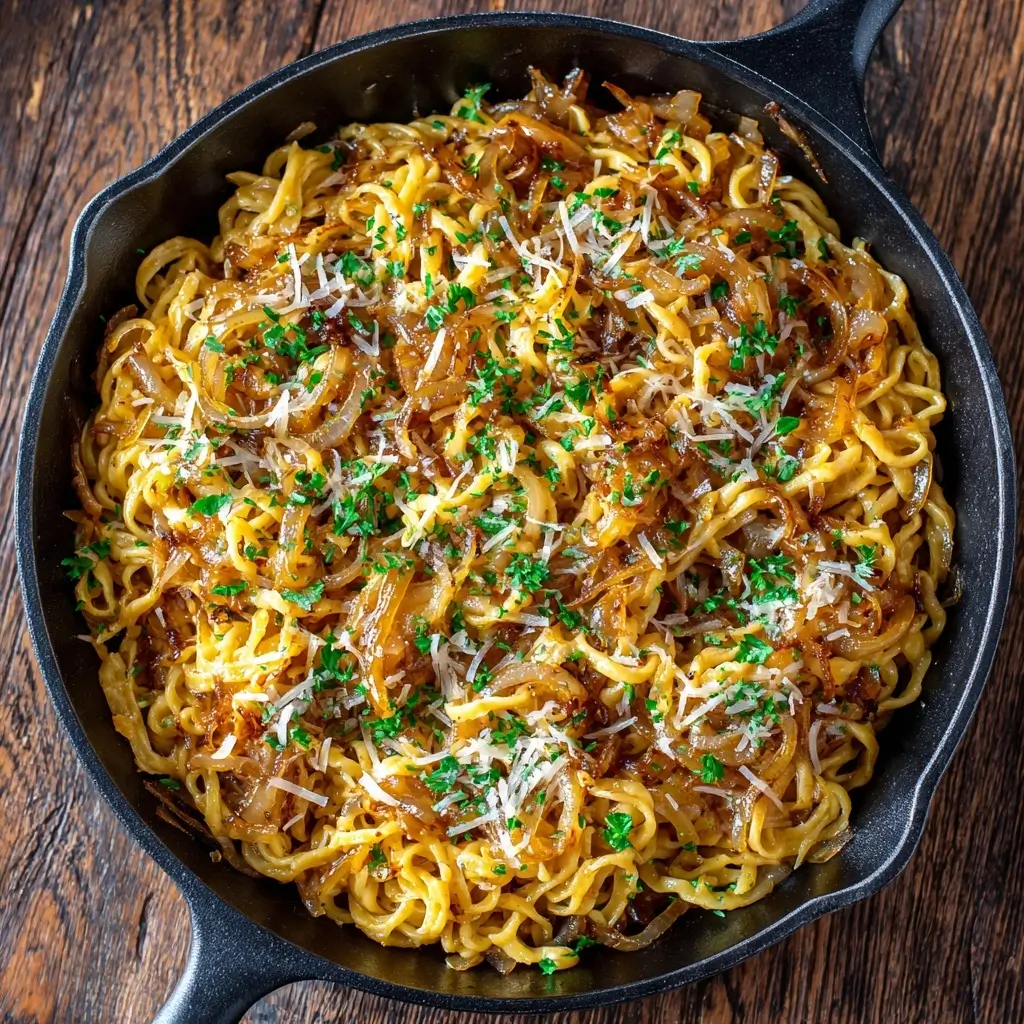
One-Pot French Onion Pasta is a soul-warming, restaurant-worthy dish that marries the deep, caramelized richness of classic French onion soup with the comforting heartiness of al dente pasta—all cooked in a single pot for effortless elegance and minimal cleanup. This ingenious fusion recipe transforms humble pantry staples into an elevated weeknight meal bursting with umami depth, sweet-savory complexity, and creamy, cheesy indulgence. Whether you’re seeking a cozy dinner after a long day, an impressive yet approachable dish for guests, or a creative twist on traditional pasta preparations, this one-pot wonder delivers extraordinary flavor without the fuss. Its aromatic layers—slow-cooked onions, fragrant thyme and garlic, rich beef or vegetable broth, and a generous finish of Gruyère and Parmesan—create a harmonious symphony that lingers pleasantly on the palate. What truly sets it apart is its thoughtful construction: every element builds upon the last, from the foundational Maillard reaction of caramelized onions to the starch-thickened, velvety sauce that clings luxuriously to each strand of pasta.
The History
While “One-Pot French Onion Pasta” is a modern culinary innovation with no singular documented origin, its roots run deep through centuries of European gastronomic tradition. French onion soup—soupe à l’oignon—dates back to ancient Rome but was refined in 18th-century Paris, famously served at bistrots like La Grande Taverne de Londres, where chef Antoine Beauvilliers elevated it into a refined dish featuring caramelized onions, rich brown stock, crusty bread, and melted Gruyère. Meanwhile, pasta’s history spans millennia—from early Chinese wheat noodles to Arab traders introducing dried pasta to Sicily by the 9th century—and Italian cucina povera championed one-pot cooking as both practical and flavorful. The convergence of these traditions emerged organically in the late 20th and early 21st centuries, accelerated by food blogs, social media, and home cooks seeking time-efficient, restaurant-quality meals. Chefs and home cooks alike began experimenting with integrating French onion soup’s signature elements—caramelized onions, beef broth, thyme, and Gruyère—into pasta preparations, eliminating separate soup and starch courses. The “one-pot” methodology gained traction during the 2010s as part of a broader movement toward streamlined, sustainable cooking—reducing energy use, water consumption, and dishwashing labor without sacrificing depth or technique. Today, One-Pot French Onion Pasta stands as a testament to culinary evolution: honoring time-honored methods while embracing contemporary needs for simplicity, versatility, and bold, layered flavor.
Ingredients Breakdown
Every ingredient in this recipe serves a precise, intentional purpose—no filler, no afterthought. Let’s explore the functional and flavor roles of each component:
- Yellow or Sweet Onions (3–4 large, ~2 lbs total): The irreplaceable foundation. Yellow onions offer ideal sugar-to-water ratios for slow, even caramelization; their natural fructose breaks down into complex, nutty, almost balsamic notes over 30–45 minutes. Avoid red onions (too sharp) or white onions (too pungent raw, less sweetness when cooked).
- Unsalted Butter (3 tbsp) + Olive Oil (1 tbsp): A strategic fat blend. Butter contributes rich dairy notes and promotes fond development, while olive oil raises the smoke point, preventing burning during extended sautéing. Clarified butter or ghee can be substituted for higher-heat stability.
- Garlic (4–5 cloves, minced): Added late in the caramelization process to avoid bitterness. Its pungency mellows into savory-sweet aroma, amplifying the onion’s depth without overpowering.
- Dry White Wine (½ cup, e.g., Sauvignon Blanc or Pinot Grigio): Acts as a deglazing agent and flavor catalyst. Its acidity cuts through richness, lifts stuck fond, and enhances volatile aromatic compounds. Substitute dry vermouth or additional broth if avoiding alcohol—but never omit entirely, as it balances sweetness and adds brightness.
- Beef Broth (4 cups, low-sodium preferred): Provides the essential savory backbone (umami) and gelatinous body. Homemade bone broth yields superior mouthfeel and collagen-rich silkiness; high-quality store-bought (like Better Than Bouillon Roasted Beef Base) is an excellent alternative. For vegetarian versions, use deeply flavored mushroom or roasted vegetable broth with added tamari or miso for glutamate depth.
- Fresh Thyme (1 tbsp leaves, or 1 tsp dried): Earthy, floral, and subtly minty—thyme is the quintessential herb of French onion soup. It withstands long simmering and complements both beef and cheese without competing.
- Bay Leaf (1 whole, removed before serving): Adds a gentle, woodsy background note and subtle bitterness that rounds out sweetness—a classic aromatic trifecta with thyme and black pepper.
- Italian-Style Pasta (12 oz, e.g., spaghetti, linguine, or bucatini): Long, slender shapes absorb broth beautifully and provide ideal textural contrast to tender onions. Avoid short pastas like penne—they release too much starch too quickly, risking gumminess. Ensure it’s bronze-die extruded for superior sauce adhesion.
- Gruyère Cheese (1½ cups, freshly grated): Non-negotiable for authenticity. Aged 6–12 months, Gruyère offers crystalline crunch, buttery nuttiness, and exceptional meltability. Pre-grated shreds contain anti-caking agents that inhibit smooth melting—always grate fresh.
- Parmigiano-Reggiano (½ cup, freshly grated): Adds salty, fermented complexity and umami punch. Its granular texture contributes subtle graininess that contrasts beautifully with Gruyère’s creaminess.
- Heavy Cream (¼ cup, optional but recommended): Introduces luxurious mouthfeel and tempers acidity. Use full-fat for stability; avoid ultra-pasteurized cream, which may curdle. For dairy-free, substitute cashew cream (soaked, blended, strained) or coconut cream (refrigerated overnight, skimmed thick layer).
- Black Pepper (freshly ground, to taste): Enhances all other flavors and activates piperine, increasing bioavailability of nutrients in onions and herbs.
- Fresh Parsley (for garnish): A vibrant, clean finish that cuts richness and adds visual appeal.
Step-by-Step Recipe
- Prep & Prep Work (10 minutes): Peel and thinly slice onions (use a mandoline for uniformity—critical for even caramelization). Mince garlic. Measure broth, wine, herbs, and cheeses. Grate cheeses separately and keep chilled until needed. Have pasta ready nearby.
- Caramelize the Onions (35–45 minutes, non-negotiable): In a heavy-bottomed Dutch oven or wide, deep skillet (6–7 qt), combine butter and olive oil over medium-low heat. Once butter melts and foams subside, add onions with a pinch of salt. Stir to coat. Cook uncovered, stirring every 5–7 minutes—scraping up any browned bits—to encourage even browning. Reduce heat if sizzling too vigorously. After ~25 minutes, onions will soften and turn pale gold; continue cooking until deeply amber, fragrant, and reduced by ~60%, with a jammy, sticky texture. Patience here defines the entire dish.
- Aromatics & Deglaze (5 minutes): Push onions to edges. Add minced garlic to center and cook 30 seconds until fragrant. Immediately pour in white wine, scraping vigorously with a wooden spoon to lift all fond. Simmer 2–3 minutes until wine reduces by half and alcohol evaporates.
- Build the Broth Base (2 minutes): Pour in warm (not cold) beef broth, thyme, bay leaf, and a few grinds of black pepper. Bring to a gentle simmer. Taste—adjust salt only now, remembering cheese adds salt later.
- Add Pasta & Simmer (12–15 minutes): Stir in uncooked pasta, ensuring fully submerged. Reduce heat to low-medium to maintain a steady, gentle bubble—not a rolling boil. Stir every 2–3 minutes to prevent sticking and ensure even cooking. As pasta absorbs liquid, the mixture will thicken gradually. Cook until pasta is *al dente* (1–2 minutes shy of package time), about 12 minutes for spaghetti.
- Rest & Thicken (3 minutes off-heat): Remove from burner. Let stand, covered, for 3 minutes. This allows residual heat to finish cooking pasta and encourages starch release for natural thickening.
- Incorporate Dairy (2 minutes): Return to lowest heat. Whisk in heavy cream (if using). Gradually fold in grated Gruyère in three additions, stirring constantly until each batch melts completely before adding more. Avoid boiling once cheese is added—heat above 170°F risks separation. Finally, stir in Parmigiano-Reggiano.
- Final Seasoning & Serve (2 minutes): Discard bay leaf. Taste and adjust: more black pepper? A tiny splash of sherry vinegar for brightness? A pinch of flaky sea salt? Stir gently. Serve immediately in warmed bowls, garnished generously with extra Gruyère, parsley, and cracked black pepper.
Tips
- Caramelization Is King: Never rush this step. Low-and-slow is the only path to true depth. If onions begin to stick excessively, add 1 tsp water—not oil—to loosen and continue cooking. Resist stirring too frequently; let them develop fond.
- Broth Temperature Matters: Adding cold broth shocks hot onions and halts caramelization chemistry. Warm broth (microwave 1 minute) maintains thermal momentum and prevents splattering.
- Pasta Timing Precision: Start checking doneness 2 minutes before package suggests. Overcooked pasta turns mushy and over-releases starch, creating gluey sauce. Undercooked pasta remains chalky and disrupts texture harmony.
- Cheese Safety: Always remove pot from direct heat before adding cheese. Stir continuously with a silicone spatula in figure-8 motions to distribute heat evenly and prevent scorching.
- Stirring Strategy: Use a heat-resistant silicone spatula—not wood (can scratch enamel) or metal (conductive, may burn). Stir from bottom up, rotating bowl, to incorporate settled starch and prevent scorching.
- Resist the Lid Trap: Keep pot uncovered during simmering. Trapping steam dilutes flavor concentration and inhibits proper reduction. Only cover during the final rest.
- Acid Balance: If dish tastes flat or overly sweet after cheese addition, brighten with ½ tsp sherry vinegar or lemon juice—added drop by drop.
- Make-Ahead Magic: Caramelize onions up to 5 days ahead and refrigerate in airtight container. Broth base (without pasta or cheese) keeps 3 days refrigerated or 3 months frozen. Reheat gently before proceeding.
- Reheating Right: Store leftovers in shallow container. Reheat gently on stove with 1–2 tbsp broth or cream to restore silkiness. Microwave reheating often causes cheese separation—avoid unless absolutely necessary.
Variations and Customizations
This recipe is a masterful canvas—adaptable across diets, seasons, and preferences—without compromising its soulful essence:
- Vegetarian / Vegan Version: Swap beef broth for robust mushroom-vegetable broth (simmer dried porcini + carrots + celery + tomato paste). Replace butter with vegan butter and heavy cream with cashew cream. Use nutritional yeast (3 tbsp) + ½ cup vegan Gruyère-style shreds (e.g., Violife or Miyoko’s) for cheesy depth. Add 1 tsp soy sauce or tamari for umami boost.
- Gluten-Free Adaptation: Use certified GF pasta (brown rice, quinoa, or lentil-based—note cooking times vary). Ensure broth and wine are GF-certified (most are, but verify). Thicken with 1 tsp psyllium husk stirred in during final rest for improved texture.
- Protein-Packed Upgrade: Brown 8 oz sliced mushrooms (cremini or oyster) with onions for meaty texture. Or add 1 cup shredded rotisserie chicken (stirred in with cheese) or ½ lb lean ground beef (browned first, drained, then added with broth).
- Herb & Aromatic Twists: Infuse broth with star anise (1 pod, removed pre-pasta) for licorice warmth. Swap thyme for rosemary (½ tsp, finely chopped) for piney intensity. Add 1 tsp fennel seeds with onions for subtle anise nuance.
- Umami Bomb Boosters: Stir in 1 tbsp tomato paste with garlic. Add 1 tsp fish sauce (yes—vegan options exist!) with broth for stealthy savoriness. Finish with 1 tsp white miso paste whisked into cream.
- Seasonal Variations: In fall, add ½ cup roasted butternut squash purée with broth. In spring, fold in 1 cup blanched asparagus tips and peas with cheese. In winter, top with crispy fried shallots and toasted walnuts.
- Low-Carb / Keto-Friendly: Replace pasta with spiralized daikon radish or shirataki noodles (rinsed and pan-dried). Increase cheese slightly and add 1 tbsp xanthan gum to broth to mimic starch-thickened texture.
- Spiced Interpretation: Add ¼ tsp ground cumin and smoked paprika with garlic. Garnish with pickled red onions and crumbled cotija for Tex-Mex flair—still honoring French onion roots.
Health Considerations and Nutritional Value
Per serving (based on 6 servings), One-Pot French Onion Pasta delivers approximately 485 kcal, with a balanced macronutrient profile: 22g protein, 52g carbohydrates (of which 4g fiber), and 21g total fat (13g saturated). While undeniably indulgent, its nutritional merit lies in intelligent ingredient synergy and functional benefits:
- Onions: Nature’s Pharmacy: Rich in quercetin (a potent anti-inflammatory flavonoid), chromium (supports blood sugar regulation), and prebiotic fructooligosaccharides (FOS) that feed beneficial gut bacteria. Caramelization increases antioxidant bioavailability.
- Gruyère & Parmigiano: Calcium Powerhouses: One serving provides ~30% DV calcium and significant vitamin K2 (menaquinone-7), essential for bone mineralization and cardiovascular health by directing calcium away from arteries and into bones.
- Thyme & Black Pepper: Synergistic Antioxidants: Thyme contains thymol and carvacrol—natural antimicrobials and COX-2 inhibitors. Piperine in black pepper enhances absorption of curcumin, resveratrol, and beta-carotene by up to 2000%.
- Considerations for Specific Diets: Naturally low in added sugars and free from refined grains (if using whole-wheat pasta). High sodium content (from broth and cheese) can be moderated by using low-sodium broth and reducing added salt—ideal for hypertension management. Lactose-intolerant individuals may tolerate aged Gruyère and Parmigiano well (naturally low-lactose), but dairy-free versions remain safest.
- Mindful Modifications: Reduce saturated fat by using 1 tbsp butter + 2 tbsp olive oil and omitting cream. Boost fiber and micronutrients with 1 cup chopped spinach stirred in during final cheese step. For weight-conscious eaters, portion control (1 cup per serving) and pairing with a large arugula salad dressed in lemon-tahini balances the meal.
This dish exemplifies “nutrient density meets pleasure”—proving that deeply satisfying food can also nourish holistically when prepared with intention and quality ingredients.
Ingredients
- 3–4 large yellow or sweet onions (about 2 lbs), thinly sliced
- 3 tablespoons unsalted butter
- 1 tablespoon extra-virgin olive oil
- 4–5 garlic cloves, minced
- ½ cup dry white wine (e.g., Sauvignon Blanc or Pinot Grigio)
- 4 cups low-sodium beef broth (or high-quality vegetarian broth for plant-based version)
- 1 tablespoon fresh thyme leaves (or 1 teaspoon dried)
- 1 large bay leaf
- 12 ounces long Italian-style pasta (spaghetti, linguine, or bucatini)
- 1½ cups Gruyère cheese, freshly grated
- ½ cup Parmigiano-Reggiano cheese, freshly grated
- ¼ cup heavy cream (optional but highly recommended for richness)
- Freshly ground black pepper, to taste
- Kosher salt, to taste (add sparingly—cheeses contribute salt)
- Fresh flat-leaf parsley, for garnish
Directions
- Heat a 6–7 quart heavy-bottomed Dutch oven or deep skillet over medium-low heat. Add butter and olive oil. Once butter melts and foam subsides, add sliced onions and a pinch of salt. Cook uncovered, stirring every 5–7 minutes, for 35–45 minutes, until onions are deeply caramelized—rich amber color, jammy texture, and intense sweet-savory aroma. Reduce heat if browning too fast.
- Add minced garlic and cook for 30 seconds until fragrant. Immediately pour in white wine, scraping up all browned bits from the bottom of the pot. Simmer 2–3 minutes until wine reduces by half.
- Pour in warm beef broth, thyme, bay leaf, and several generous grinds of black pepper. Bring to a gentle simmer.
- Stir in uncooked pasta, ensuring it’s fully submerged. Reduce heat to maintain a steady, gentle bubble (not a vigorous boil). Stir every 2–3 minutes to prevent sticking and promote even cooking. Cook for 12–15 minutes, or until pasta is just shy of al dente (check package timing and subtract 1–2 minutes).
- Remove from heat. Cover and let rest for 3 minutes to allow pasta to finish cooking and sauce to thicken.
- Return to lowest possible heat. Whisk in heavy cream (if using). Gradually fold in grated Gruyère in three batches, stirring constantly until each addition is fully melted and silky before adding more. Stir in Parmigiano-Reggiano.
- Discard bay leaf. Taste and adjust seasoning—add more black pepper, a tiny pinch of flaky salt if needed, or a splash of sherry vinegar for brightness.
- Serve immediately in warmed bowls, garnished generously with extra grated Gruyère, chopped parsley, and freshly cracked black pepper.
FAQ
- Can I make this ahead of time?
- Yes—with caveats. Caramelized onions and broth base (without pasta or cheese) can be refrigerated for up to 3 days or frozen for 3 months. Reheat gently before adding pasta. Fully assembled dish is best served fresh, but leftovers reheat well on the stovetop with a splash of broth or cream to restore texture.
- Why does my sauce look watery or too thick?
- Watery sauce usually means insufficient reduction—ensure steady simmer and avoid covering during cooking. Too-thick sauce results from overcooking pasta or excessive starch release. Stir more frequently and reduce heat if bubbling too vigorously. A splash of warm broth instantly corrects consistency.
- Can I use pre-sliced onions from the store?
- Not recommended. Pre-sliced onions oxidize quickly, losing sweetness and developing off-flavors. Their inconsistent thickness also leads to uneven caramelization—some burn while others stay raw. Fresh slicing ensures optimal texture and depth.
- My cheese seized or became grainy—what went wrong?
- Cheese separates when overheated (above 170°F) or exposed to acid too rapidly. Always remove from heat before adding cheese. Stir constantly with residual heat only. If separation occurs, whisk in 1 tsp cold cream or broth and a pinch of cornstarch slurry (½ tsp cornstarch + 1 tsp water) to rescue.
- Is there a way to reduce the cooking time?
- The caramelization step cannot be meaningfully shortened without sacrificing flavor. However, you can multitask: start onions, then prep other ingredients. A pressure cooker adaptation exists (10 min high pressure after onions + broth), but stovetop yields superior texture and control.
- What’s the best pasta to use—and can I substitute?
- Long, thin pastas like spaghetti or linguine absorb broth beautifully and offer ideal surface area for sauce adhesion. Bucatini adds fun air pockets. Avoid short shapes (penne, fusilli)—they release starch too quickly and become gummy. Whole-wheat or legume-based pastas work but require adjusted timing and extra liquid.
- Can I freeze leftovers?
- Freezing is not ideal due to dairy separation upon thawing and reheating. Cheese sauces with high-fat content (especially Gruyère) often become oily or grainy. For best results, consume within 3 days refrigerated—or freeze just the caramelized onion base and broth separately.
- How do I make it spicier?
- For gentle heat, add ¼ tsp red pepper flakes with thyme. For smoky depth, stir in ½ tsp smoked paprika with garlic. For bright heat, finish with pickled jalapeño slices or a drizzle of chili crisp.
Summary
One-Pot French Onion Pasta is a masterclass in layered flavor and mindful technique—transforming humble onions, broth, and pasta into a decadent, deeply savory, restaurant-caliber dish through patient caramelization, precise temperature control, and luxurious cheese integration.
Effortless to prepare yet endlessly customizable, it honors centuries-old culinary traditions while delivering modern convenience, remarkable nutrition, and unforgettable comfort—all in a single vessel that minimizes cleanup without compromising an ounce of sophistication.