
Introduction
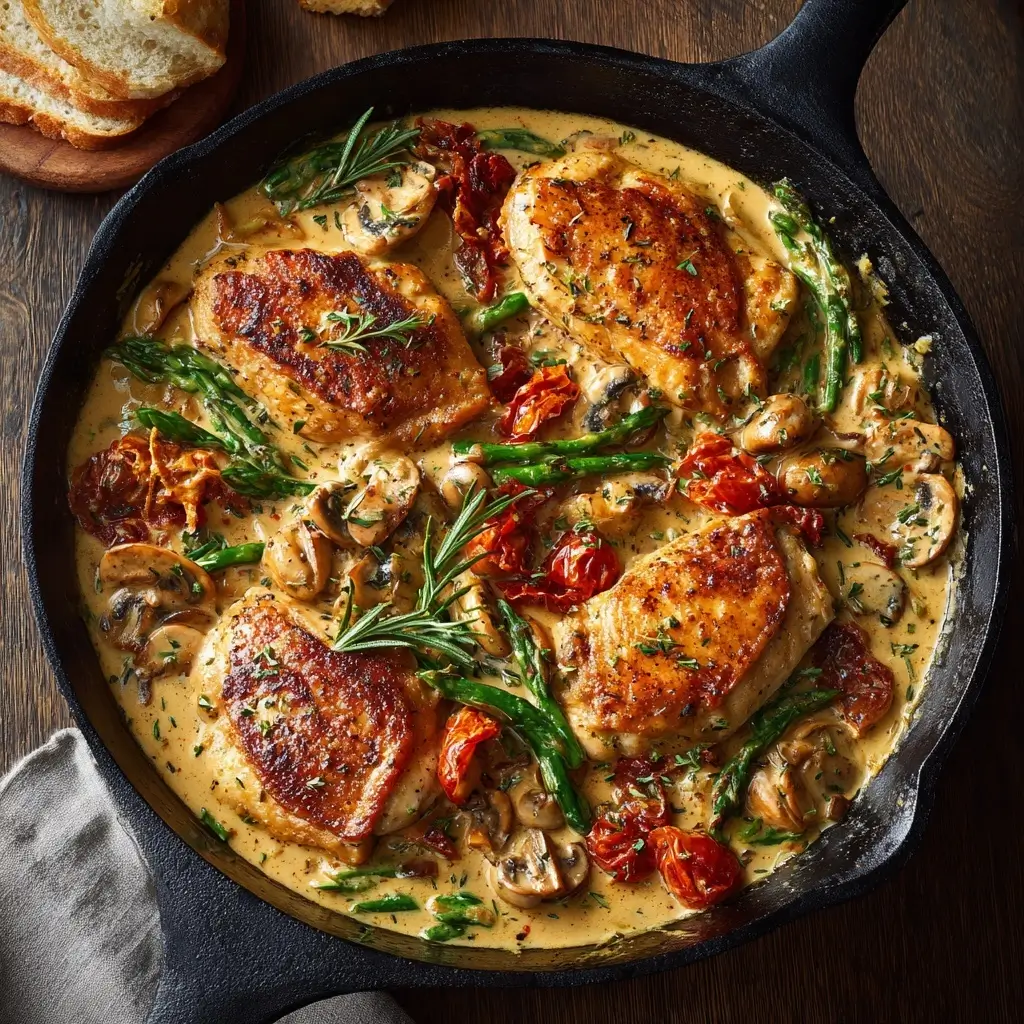
One-Pan Creamy Tuscan Chicken is a beloved weeknight dinner staple that effortlessly marries rustic Italian flavors with modern convenience. This dish delivers restaurant-quality richness—creamy, garlicky, herb-kissed, and deeply savory—without the hassle of multiple pots, pans, or complicated techniques. Its magic lies in its simplicity: tender chicken breasts or thighs seared to golden perfection, then simmered gently in a luscious, velvety sauce infused with sun-dried tomatoes, spinach, garlic, Parmesan, and a whisper of white wine—all cooked in a single skillet from start to finish. Whether you’re feeding a busy family, impressing guests with minimal effort, or meal-prepping for nourishing lunches, this recipe checks every box: flavorful, comforting, adaptable, and undeniably satisfying. It’s not just a recipe—it’s a culinary philosophy centered on elegance through efficiency.
The History
While “Tuscan Chicken” isn’t a traditional dish from Tuscany itself—where olive oil, beans, roasted meats, and simple grilled vegetables reign—the inspiration draws authentically from the region’s pantry and ethos. Tuscan cuisine (cucina povera, or “poor kitchen”) emphasizes seasonal, local ingredients prepared with reverence and restraint: extra-virgin olive oil, garlic, rosemary, sage, sun-dried tomatoes (a preservation method born of necessity), and aged cheeses like Pecorino Toscano. The creamy iteration popularized globally emerged in the late 1990s and early 2000s as American home cooks began fusing Italian flavor profiles with richer, dairy-forward preparations—think heavy cream, mascarpone, and generous Parmigiano-Reggiano—reflecting both evolving pantry staples and a cultural appetite for comfort. The “one-pan” evolution came later, catalyzed by the rise of minimalist cooking trends, food blogs, and social media platforms prioritizing visual appeal and practicality. Chefs and home cooks alike realized that building layers of flavor directly in the same pan—searing chicken, sweating aromatics, deglazing with wine, reducing cream, and wilting greens—yielded deeper complexity *and* easier cleanup. Today, One-Pan Creamy Tuscan Chicken stands as a delicious testament to culinary globalization: an Italian-inspired, American-refined, globally adored weeknight classic.
Ingredients Breakdown
Every ingredient in this dish plays a deliberate, synergistic role—not just for taste, but for texture, balance, and functionality:
- Chicken Breasts or Thighs: Boneless, skinless chicken breasts offer lean tenderness; thighs provide richer flavor and forgiving moisture (ideal for beginners). Uniform thickness ensures even cooking—pounding to ½-inch is highly recommended.
- Olive Oil & Butter: Olive oil handles high-heat searing without burning; butter adds nutty depth and mouth-coating richness during the final simmer. Using both creates a superior Maillard reaction and luxurious mouthfeel.
- Garlic: Fresh minced garlic—not powder—is essential. Added *after* onions soften (but before browning intensifies) prevents bitterness and unlocks sweet, aromatic compounds.
- Shallots or Yellow Onion: Shallots lend subtle sweetness and refined sharpness; onions offer heartier body and caramelization potential. Both build foundational umami.
- Dry White Wine (e.g., Pinot Grigio, Sauvignon Blanc): Not optional for depth. Acid cuts richness, alcohol lifts volatile aromatics, and residual sugars enhance the sauce’s roundness. Substitute with low-sodium chicken broth + 1 tsp lemon juice if avoiding alcohol—but don’t skip the acidity.
- Low-Sodium Chicken Broth: Provides savory backbone (collagen-rich bone broth adds extra silkiness). Low-sodium allows precise salt control—critical when adding salty Parmesan and sun-dried tomatoes.
- Heavy Cream (or Full-Fat Coconut Milk for Dairy-Free): Minimum 36% milk fat ensures stability—prevents curdling and delivers unctuous body. Light cream or half-and-half may break or thin the sauce.
- Fresh Spinach: Baby spinach wilts instantly, contributing earthy freshness and vibrant color. Mature spinach works but requires longer wilting and stem removal.
- Sun-Dried Tomatoes (in oil, drained & chopped): Concentrated sweetness, tang, and chewy texture contrast the cream. Oil-packed varieties add fruity olive notes; avoid dry-packed unless rehydrated in warm broth first.
- Fresh Herbs (Rosemary & Sage): Rosemary offers piney, resinous warmth; sage brings peppery, slightly minty depth. Both stand up to rich cream. Dried versions work in a pinch (use ⅓ the amount), but fresh elevates authenticity.
- Grated Parmigiano-Reggiano (not pre-grated): Real Parmesan contains natural enzymes and crystalline texture that melt into silk—not grit. Pre-grated cheese contains anti-caking agents (e.g., cellulose) that impede smooth melting and create graininess.
- Lemon Zest & Juice: Brightens the entire dish, cutting fat and balancing sweetness from tomatoes and cream. Added at the very end to preserve volatile citrus oils.
- Red Pepper Flakes (optional but recommended): A whisper (¼ tsp) adds gentle warmth and dimension—not heat—enhancing other spices without overpowering.
- Kosher Salt & Freshly Ground Black Pepper: Salting chicken *before* cooking seasons deeply and improves moisture retention. Freshly ground pepper releases piperine oils for aromatic heat.
Step-by-Step Recipe
- Prep & Season: Pat chicken *very* dry with paper towels (critical for browning). Pound to even ½-inch thickness using a meat mallet or rolling pin. Season generously on both sides with kosher salt and black pepper. Let sit at room temperature 15 minutes.
- Heat Pan & Sear: Heat a large, heavy-bottomed oven-safe skillet (12-inch cast iron or stainless steel preferred) over medium-high heat. Add 2 tbsp olive oil. When shimmering (not smoking), place chicken in pan without crowding. Press gently. Sear undisturbed 5–6 minutes until deeply golden and releasing easily. Flip; cook 4–5 more minutes until internal temp reaches 155°F (it will rise to 165°F while resting). Transfer to a clean plate, tent loosely with foil.
- Sauté Aromatics: Reduce heat to medium. Add 1 tbsp butter, shallots/onion, and a pinch of salt. Cook 3–4 minutes until softened and translucent. Add minced garlic, rosemary, sage, and red pepper flakes; stir 30 seconds until fragrant (do not brown garlic).
- Deglaze: Pour in white wine, scraping vigorously with a wooden spoon to lift all browned bits (fond) from the pan bottom—this is pure flavor gold. Simmer 2–3 minutes until reduced by half and alcohol smell dissipates.
- Build Sauce Base: Stir in chicken broth and sun-dried tomatoes. Bring to a gentle simmer. Cook 4–5 minutes to meld flavors and reduce slightly.
- Incorporate Cream: Whisk in heavy cream gradually. Reduce heat to low-medium. Simmer uncovered 3–4 minutes, stirring often, until sauce thickens enough to coat the back of a spoon (nappe consistency). Avoid boiling vigorously—it may cause separation.
- Finish with Chicken & Greens: Return chicken (and any accumulated juices) to pan. Spoon sauce over pieces. Nestle in fresh spinach. Cover pan and simmer gently 2–3 minutes until spinach is wilted and chicken reaches 165°F internally.
- Enrich & Brighten: Remove from heat. Stir in grated Parmigiano-Reggiano until fully melted and glossy. Finish with lemon zest and juice. Taste and adjust seasoning—more salt? A touch more lemon? A grating of fresh black pepper?
- Rest & Serve: Let rest uncovered 3–5 minutes—allows sauce to settle and flavors to harmonize. Garnish with extra herbs, lemon zest, or a drizzle of high-quality olive oil.
Tips
- Dry Chicken = Golden Chicken: Moisture is the enemy of browning. Pat chicken *thoroughly*—even between folds—and consider salting 30 minutes ahead, then patting again before cooking.
- Don’t Crowd the Pan: If your skillet is too small, sear in batches. Overcrowding drops pan temperature, steams instead of sears, and yields gray, tough chicken.
- Control Your Heat: Medium-high for searing, medium for aromatics, low-medium for cream reduction. Jumping between extremes risks burnt garlic or broken sauce.
- Scrape That Fond! Those caramelized bits hold concentrated flavor. Use the flat edge of a wooden spoon—not metal—to release them without scratching nonstick surfaces.
- Cream Stability Secret: Never add cold cream to a hot pan. Warm it slightly in a separate bowl or microwave (10 sec) first. Also, whisk constantly when incorporating.
- Spinach Timing Matters: Add only *after* sauce has thickened and chicken is nearly done. Overcooking turns spinach bitter and murky green.
- Resting Is Non-Negotiable: Allowing the finished dish to rest lets proteins relax, reabsorbing juices, and gives the sauce time to emulsify fully for silkier texture.
- Resist Over-Stirring Post-Cheese: Once Parmesan is added, stir gently and minimally. Vigorous whisking can make the sauce grainy.
- Skillet Choice Impacts Results: Cast iron retains heat beautifully for searing and even simmering. Stainless steel offers superior fond development. Avoid thin aluminum—it burns garlic and causes uneven cream reduction.
- Taste, Then Adjust: Sauce evolves dramatically from deglaze to finish. Always taste after adding cream, after cheese, and after lemon—each step changes balance.
Variations and Customizations
This recipe is a canvas—here’s how to make it your own:
- Protein Swaps: Try boneless pork chops (thin-cut), shrimp (add in last 2 minutes), or even firm tofu (pressed, marinated in soy-mirin-ginger, pan-seared).
- Veggie Boosts: Add sautéed mushrooms (cremini or oyster) with shallots; roasted cherry tomatoes (halved, tossed in olive oil, roasted at 425°F for 15 mins); artichoke hearts (marinated, drained); or zucchini ribbons (added with spinach).
- Cream Alternatives: For lighter version: substitute half the cream with full-fat Greek yogurt (stir in off-heat at the end). For dairy-free: use canned coconut milk (full-fat, stirred well) + 1 tsp nutritional yeast for umami depth.
- Herb Twists: Swap rosemary/sage for fresh thyme (earthy, floral) or basil (bright, summery—add at the very end). Lemon thyme pairs exquisitely with the citrus finish.
- Wine Substitutions: Dry vermouth (more herbal), dry sherry (nutty complexity), or even a splash of apple cider vinegar + broth for acidity without alcohol.
- Gluten-Free Friendly: Naturally GF—just verify broth and sun-dried tomato packaging (some contain gluten additives). Serve over GF pasta, rice, or cauliflower mash.
- Meal Prep Magic: Double the batch. Store sauce + chicken separately for up to 4 days. Reheat gently on stove with splash of broth to refresh creaminess. Freezes well for up to 3 months (thaw overnight in fridge, reheat slowly).
- Grain & Base Pairings: Beyond pasta: creamy polenta, farro salad, quinoa pilaf, crusty artisan bread for dipping, or roasted fingerling potatoes.
- Spice It Up: Add ½ tsp smoked paprika with garlic, or finish with Calabrian chili paste for fruity heat.
- Kid-Friendly Version: Omit red pepper flakes and garlic; add a tablespoon of tomato paste with the broth for mild sweetness and body. Stir in shredded mozzarella at the end for extra meltiness.
Health Considerations and Nutritional Value
A single serving (approx. 1 chicken breast + ¾ cup sauce) provides balanced macro- and micronutrients—when prepared mindfully:
- Protein Powerhouse: Chicken delivers ~35g high-quality, complete protein per breast—supporting muscle maintenance, satiety, and metabolic health.
- Smart Fats: Olive oil contributes monounsaturated fats (heart-healthy oleic acid); Parmesan offers conjugated linoleic acid (CLA), linked to anti-inflammatory benefits. Limit butter to 1 tbsp max for saturated fat control.
- Vitamin & Mineral Rich: Spinach supplies iron, folate, vitamin K (for bone and blood health), and lutein (eye health). Sun-dried tomatoes are packed with lycopene (a potent antioxidant enhanced by oil infusion). Garlic supports immune function and cardiovascular health.
- Lower-Carb & Keto-Friendly: With <5g net carbs per serving (excluding base), it fits ketogenic, low-carb, and diabetic-friendly plans—just monitor portion sizes of sun-dried tomatoes (naturally higher in sugar).
- Reducing Sodium Strategically: Using low-sodium broth, unsalted butter, and controlling added salt keeps sodium under 600mg/serving—well within daily recommendations (<2,300mg). Rinsing sun-dried tomatoes briefly can further reduce sodium by ~15%.
- Cream Considerations: Heavy cream adds saturated fat (~10g/serving), but recent research shows moderate intake within a balanced diet doesn’t correlate with heart disease. For lower-fat: use whole milk + 1 tsp cornstarch slurry (whisked in before simmering) for thickening—though richness diminishes.
- Digestive Notes: Garlic and lemon aid digestion; spinach’s fiber supports gut motility. Those with GERD may reduce lemon juice or omit red pepper flakes.
- Allergen Awareness: Contains dairy (cream, cheese) and gluten (if served over pasta—use GF alternatives). Naturally nut-free and soy-free (verify broth labels).
- Balanced Meal Assembly: Round out nutrition with a side of roasted asparagus (vitamin C, folate) or mixed greens with lemon-tahini dressing (healthy fats, fiber) for a complete, phytonutrient-dense plate.
Ingredients
- 2 (6–8 oz) boneless, skinless chicken breasts or thighs, pounded to ½-inch thickness
- 1½ tsp kosher salt, divided (¾ tsp for chicken, ¾ tsp for sauce)
- 1 tsp freshly ground black pepper, divided
- 2 tbsp extra-virgin olive oil
- 1 tbsp unsalted butter
- ½ cup finely diced shallots or yellow onion
- 4 cloves garlic, minced
- 1 tsp fresh rosemary leaves, finely chopped
- 1 tsp fresh sage leaves, finely chopped
- ¼ tsp red pepper flakes (optional)
- ½ cup dry white wine (e.g., Pinot Grigio, Sauvignon Blanc)
- 1 cup low-sodium chicken broth
- ⅓ cup oil-packed sun-dried tomatoes, drained and finely chopped
- 1 cup heavy cream (minimum 36% fat)
- 4 cups fresh baby spinach (about 4 oz)
- ½ cup freshly grated Parmigiano-Reggiano cheese (not pre-grated)
- Zest and juice of 1 medium lemon (about 1 tsp zest, 1 tbsp juice)
Directions
- Pat chicken dry with paper towels. Season both sides with ¾ tsp salt and ½ tsp black pepper. Let sit 15 minutes at room temperature.
- Heat a 12-inch heavy-bottomed skillet over medium-high heat. Add olive oil. When shimmering, add chicken without crowding. Sear 5–6 minutes per side until golden and internal temperature reaches 155°F. Transfer to plate; tent with foil.
- Reduce heat to medium. Add butter, shallots/onion, and remaining ¾ tsp salt. Cook 3–4 minutes until soft. Add garlic, rosemary, sage, and red pepper flakes; stir 30 seconds until fragrant.
- Pour in wine, scraping pan bottom thoroughly. Simmer 2–3 minutes until reduced by half.
- Stir in broth and sun-dried tomatoes. Simmer 4–5 minutes.
- Whisk in cream gradually. Reduce heat to low-medium. Simmer 3–4 minutes, stirring often, until sauce coats spoon.
- Return chicken and juices to pan. Add spinach. Cover and simmer 2–3 minutes until spinach wilts and chicken reaches 165°F.
- Remove from heat. Stir in Parmesan until melted and glossy. Stir in lemon zest and juice. Taste; adjust salt/pepper/lemon as needed.
- Let rest 3–5 minutes. Serve warm, garnished with extra herbs, lemon zest, or a drizzle of olive oil.
FAQ
- Can I use frozen chicken?
- Yes—but thaw completely in the fridge overnight. Cooking from frozen leads to uneven searing and excess water release, diluting the sauce. If urgent, use the cold-water thaw method (sealed bag, submerged 30 mins).
- Why does my sauce break or look curdled?
- Most commonly due to overheating cream (boiling), adding cold cream to hot pan, or vigorous whisking after cheese is added. Fix it: remove from heat, whisk in 1 tsp cold cream or broth, and let sit 1 minute to re-emulsify. Next time, keep heat low and warm cream first.
- Can I make this ahead of time?
- Absolutely! Prepare sauce and sear chicken up to 1 day ahead. Store separately in airtight containers in the fridge. Reheat sauce gently, add chicken, then proceed from Step 7. For best texture, add spinach and lemon fresh.
- What’s the best pasta to serve with it?
- Short, textured shapes hold sauce best: fusilli, casarecce, orecchiette, or pappardelle. Gluten-free options: brown rice penne or lentil fusilli. For low-carb: zucchini noodles (add raw at serving) or shirataki rice.
- My sauce is too thin—how do I thicken it?
- Simmer uncovered 2–3 more minutes, stirring constantly. Or make a slurry: mix 1 tsp cornstarch with 1 tbsp cold broth, whisk into sauce, and simmer 1 minute until glossy.
- Can I use dried herbs instead of fresh?
- Yes—use 1 tsp dried rosemary and ½ tsp dried sage (dried herbs are 3x more potent). Add them with the garlic for better rehydration.
- Is there a way to make it lower in calories?
- Substitute half the cream with evaporated skim milk (adds creaminess without fat); use chicken thighs with skin removed; increase spinach to 6 cups for volume/fiber; serve over cauliflower rice.
- Can I cook this entirely on the stovetop?
- Yes—no oven required. Just ensure your skillet is large enough to hold everything comfortably. A lid is essential for gentle steaming of spinach and finishing the chicken.
- How do I store leftovers?
- In airtight containers in the fridge for up to 4 days. Freeze sauce + chicken (without spinach or lemon) for up to 3 months. Thaw overnight in fridge; reheat slowly with splash of broth, then stir in fresh spinach and lemon juice.
- What wine should I use if I don’t drink alcohol?
- Use ½ cup low-sodium broth + 1 tsp apple cider vinegar or white wine vinegar + ½ tsp sugar. Simmer 1 minute before adding broth to mimic acidity and depth.
Summary
One-Pan Creamy Tuscan Chicken is a masterclass in effortless elegance—transforming humble pantry staples into a luxuriously creamy, herb-infused, deeply savory weeknight triumph—all in a single skillet with minimal cleanup. With its tender seared chicken, sun-kissed tomatoes, wilted spinach, and velvety Parmesan-lemon finish, it delivers restaurant-worthy comfort that’s endlessly customizable, nutritionally balanced, and beloved across generations.