
Introduction
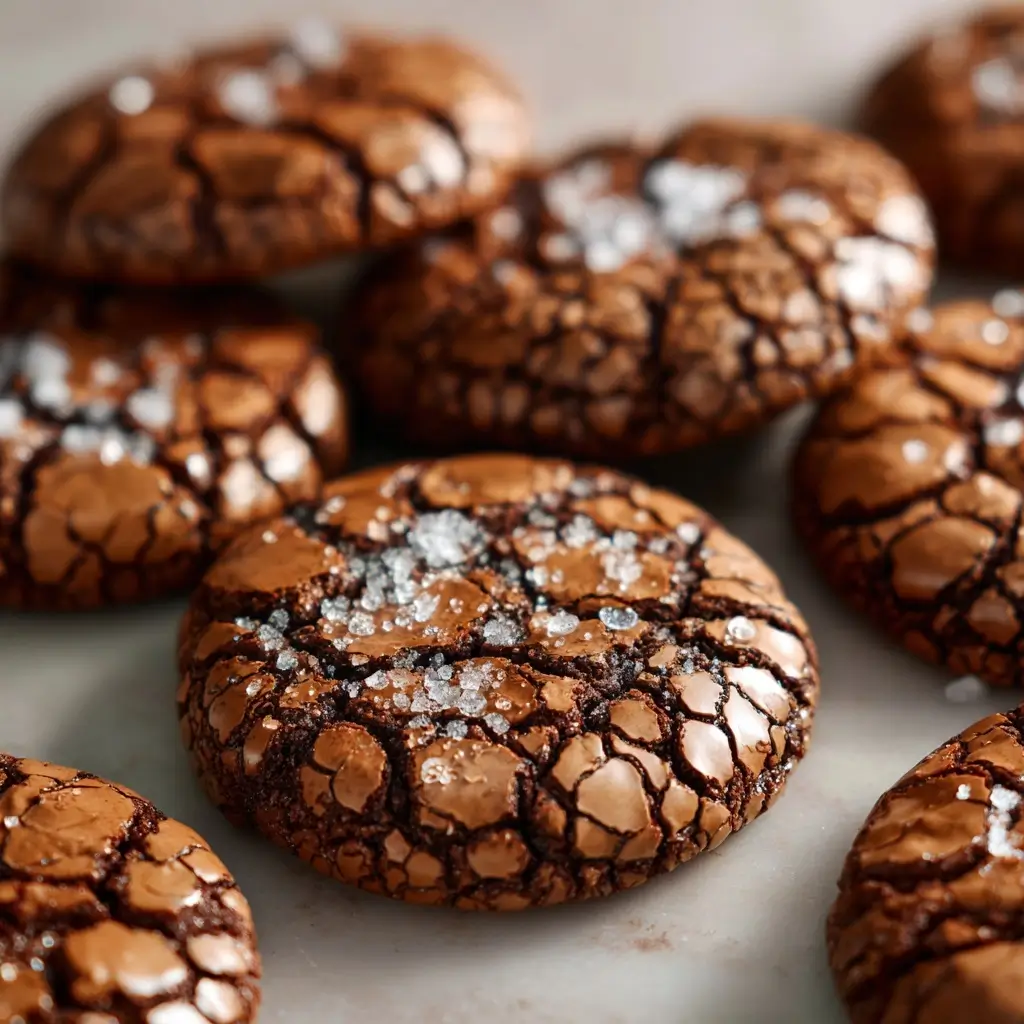
Brownie Cookies with crackly tops are the perfect fusion of two beloved desserts: fudgy brownies and chewy, tender cookies. These indulgent treats boast a rich chocolate flavor, a soft and dense center, and a beautifully cracked, crinkled surface that forms during baking—giving them their signature look. With each bite, you get a crisp outer edge giving way to a moist, almost gooey interior that melts in your mouth. Whether you’re baking for a weekend treat, a holiday gathering, or simply satisfying a chocolate craving, these cookies are sure to impress. They’re easy to make, require no special equipment, and can be customized in countless ways to suit your taste.
The History
The origin of Brownie Cookies with crackly tops lies at the intersection of American baking traditions. Brownies themselves were first created in the late 19th century, reportedly making their debut at the 1893 World’s Columbian Exposition in Chicago. As home bakers experimented with cake-like and fudgy versions, cookie adaptations soon followed. The crackly top—a hallmark of well-made brownies and certain types of cookies like chocolate crinkles—emerges from a high-sugar, low-flour batter that spreads slightly in the oven while forming a delicate crust as it dries.
Cookies with crackled surfaces became popular in the mid-20th century, especially around holidays, often rolled in powdered sugar before baking. Over time, bakers began combining the dense, chocolate-rich texture of brownies with the individual portion size and spread of a cookie. The result? Brownie Cookies with crackly tops—a modern favorite that pays homage to classic American desserts while offering something uniquely decadent.
Ingredients Breakdown
The magic of these Brownie Cookies lies not just in technique, but in the careful balance of key ingredients:
- Unsweetened Cocoa Powder: Provides deep, intense chocolate flavor without adding extra fat. Dutch-processed cocoa offers a smoother, richer taste, while natural cocoa gives a more acidic, sharp note.
- Butter: High-fat unsalted butter ensures richness and tenderness. It also helps create the ideal texture when creamed with sugar.
- Granulated Sugar: Crucial for creating the crackly top. When exposed to high heat, the sugar on the surface caramelizes and cracks as the cookie puffs and settles.
- Eggs: Act as both binder and leavening agent. The proteins set during baking, while the yolks add moisture and richness. Using an extra egg yolk can enhance fudginess.
- Vanilla Extract: Enhances overall flavor complexity and rounds out the sweetness.
- All-Purpose Flour: Used sparingly to keep the cookies fudgy rather than cakey. Too much flour results in a dry texture.
- Salt: Balances sweetness and intensifies chocolate flavor. Fine sea salt or kosher salt works best.
- Chocolate Chips or Chunks: Optional but recommended. Fold in semi-sweet, dark, or even white chocolate for added texture and melty pockets.
- Instant Espresso Powder (optional): A small amount enhances the depth of chocolate without making the cookies taste like coffee.
Step-by-Step Recipe
- Preheat Oven & Prepare Baking Sheets: Preheat your oven to 350°F (175°C). Line two large baking sheets with parchment paper or silicone baking mats. This prevents sticking and ensures even baking.
- Cream Butter and Sugar: In a large mixing bowl, beat softened unsalted butter and granulated sugar together using a hand mixer or stand mixer until light, fluffy, and pale yellow—about 2–3 minutes. This step incorporates air, which helps form the crackly surface.
- Add Eggs and Vanilla: Add one large egg and one egg yolk (for extra richness), along with 1 teaspoon of pure vanilla extract. Beat on medium speed until fully incorporated and the mixture is smooth and glossy.
- Mix Dry Ingredients: In a separate bowl, sift together ½ cup (40g) all-purpose flour, ¾ cup (65g) unsweetened cocoa powder, ¼ teaspoon baking powder, ½ teaspoon salt, and 1 teaspoon instant espresso powder (if using). Sifting prevents lumps and ensures even distribution.
- Combine Wet and Dry Mixtures: Gradually add the dry ingredients to the wet mixture, mixing on low speed until just combined. Do not overmix—this keeps the cookies tender. Once the batter comes together, fold in 1 cup of chocolate chips or chopped chocolate using a spatula.
- Chill the Dough (Optional but Recommended): Cover the dough and refrigerate for 30–60 minutes. Chilling firms up the butter, prevents excessive spreading, and intensifies flavors.
- Scoop and Shape: Use a cookie scoop or tablespoon to portion the dough into 1.5-tablespoon balls. Roll them smoothly between your palms and place them at least 2 inches apart on the prepared baking sheets.
- Bake Until Cracked and Set: Bake for 10–12 minutes. The cookies are done when the tops are cracked and slightly dry to the touch, but the centers still appear soft and underbaked. They will continue to set as they cool.
- Cool on Pan: Let the cookies cool on the baking sheet for 5 minutes before transferring to a wire rack to cool completely. This allows them to firm up without breaking.
Tips
- Use Room-Temperature Butter and Eggs: Cold ingredients don’t cream well, leading to a dense or uneven texture.
- Don’t Overbake: Remove the cookies when they still look slightly underdone in the center. Overbaking turns them cakey instead of fudgy.
- Roll Smooth Balls: Smooth, tightly rolled dough balls create better crackle patterns than rough ones.
- Uniform Size: Use a cookie scoop to ensure even baking. Aim for 1.5 tablespoons per cookie.
- Parchment Paper is Key: Prevents over-browning on the bottom and makes cleanup easier.
- Let Them Rest: Allowing the cookies to sit on the baking sheet after baking helps them finish cooking gently and develop structure.
- Freeze Extra Dough: Scoop and freeze unbaked dough balls on a tray, then transfer to a freezer bag. Bake straight from frozen, adding 1–2 minutes to the bake time.
Variations and Customizations
- Double Chocolate Crinkle Cookies: Roll the dough balls in powdered sugar before baking for a snowy, crinkle-top effect.
- Peanut Butter Swirl: Drop a small spoonful of peanut butter onto each dough ball and lightly swirl with a knife before baking.
- Mint Chocolate: Add ¼ teaspoon peppermint extract and use chocolate chips with mint filling.
- Sea Salt Finish: Sprinkle flaky sea salt on top immediately after baking for a sweet-and-salty contrast.
- Gluten-Free Version: Substitute the all-purpose flour with a 1:1 gluten-free baking blend. Ensure cocoa powder and chocolate are certified gluten-free.
- Vegan Adaptation: Replace butter with vegan butter, eggs with flax eggs (1 tbsp ground flax + 3 tbsp water per egg), and use dairy-free chocolate.
- Nutty Crunch: Fold in chopped walnuts, pecans, or hazelnuts for added texture.
- Spiced Brownie Cookies: Add a pinch of cinnamon, cayenne, or nutmeg for warmth and complexity.
- Orange Zest Infusion: Add 1 teaspoon of finely grated orange zest to brighten the chocolate flavor.
Health Considerations and Nutritional Value
While Brownie Cookies with crackly tops are undeniably indulgent, understanding their nutritional profile can help with mindful enjoyment:
- Calories: Approximately 120–150 calories per cookie, depending on size and ingredients.
- Fat Content: Around 7–9g per cookie, primarily from butter and chocolate. Most is saturated fat, so moderation is key.
- Sugar: About 10–12g per cookie, mainly from granulated sugar and chocolate. Consider reducing sugar by 10–15% for a less sweet version, though this may affect texture and cracking.
- Carbohydrates: Roughly 15–18g, mostly from sugar and flour.
- Protein: 1–2g per cookie, coming from eggs and cocoa.
- Dietary Modifications: For lower sugar, try using coconut sugar or a monk fruit blend. For reduced fat, substitute half the butter with unsweetened applesauce—but expect a denser, less rich result.
- Antioxidants: Dark cocoa powder contains flavonoids, which have antioxidant properties. Opt for high-cocoa, low-sugar chocolate to maximize benefits.
- Portion Control: These cookies are rich, so savoring one or two is often more satisfying than eating several.
Ingredients
- ½ cup (1 stick / 113g) unsalted butter, softened
- ¾ cup (150g) granulated sugar
- 1 large egg + 1 egg yolk, room temperature
- 1 teaspoon pure vanilla extract
- ½ cup (40g) all-purpose flour
- ¾ cup (65g) unsweetened cocoa powder (natural or Dutch-process)
- ¼ teaspoon baking powder
- ½ teaspoon salt
- 1 teaspoon instant espresso powder (optional)
- 1 cup (175g) semi-sweet or dark chocolate chips or chunks
Directions
- Preheat oven to 350°F (175°C). Line baking sheets with parchment paper.
- In a large bowl, cream together butter and sugar until light and fluffy (2–3 minutes).
- Beat in the egg, egg yolk, and vanilla until smooth and glossy.
- In another bowl, whisk together flour, cocoa powder, baking powder, salt, and espresso powder.
- Gradually mix dry ingredients into wet until just combined.
- Fold in chocolate chips with a spatula.
- Refrigerate dough for 30–60 minutes for best texture.
- Scoop into 1.5-tablespoon balls, roll smooth, and place 2 inches apart on baking sheets.
- Bake for 10–12 minutes until tops are cracked and centers are soft.
- Cool on baking sheet for 5 minutes, then transfer to a wire rack.
- Enjoy warm or at room temperature. Store in an airtight container for up to 5 days.
FAQ
Why aren’t my cookies cracking?
The crackly top forms due to rapid expansion of the cookie’s surface during baking. Make sure you’re creaming the butter and sugar well, using enough sugar, and not over-flouring the dough. Also, avoid overmixing once flour is added.
Can I make these without cocoa powder?
No, cocoa powder is essential for the deep chocolate flavor and color. However, you can substitute with melted dark chocolate, reducing butter slightly—but the texture may change.
How do I store Brownie Cookies?
Keep them in an airtight container at room temperature for up to 5 days. For longer storage, freeze baked cookies for up to 3 months.
Can I use oil instead of butter?
Yes, but butter contributes flavor and structure. If substituting, use ⅓ cup neutral oil. Expect a softer, less rich cookie.
Why did my cookies spread too much?
Possible causes: butter was too soft, dough wasn’t chilled, or too little flour. Always measure flour correctly—spoon and level, don’t scoop.
Can I double the recipe?
Yes! Just use a larger bowl and mix in batches if needed. Spread across multiple baking sheets with proper spacing.
Summary
Rich, fudgy Brownie Cookies with crackly tops deliver the best of brownies and cookies in one irresistible bite. Easy to make and endlessly customizable, they’re a chocolate lover’s dream.