
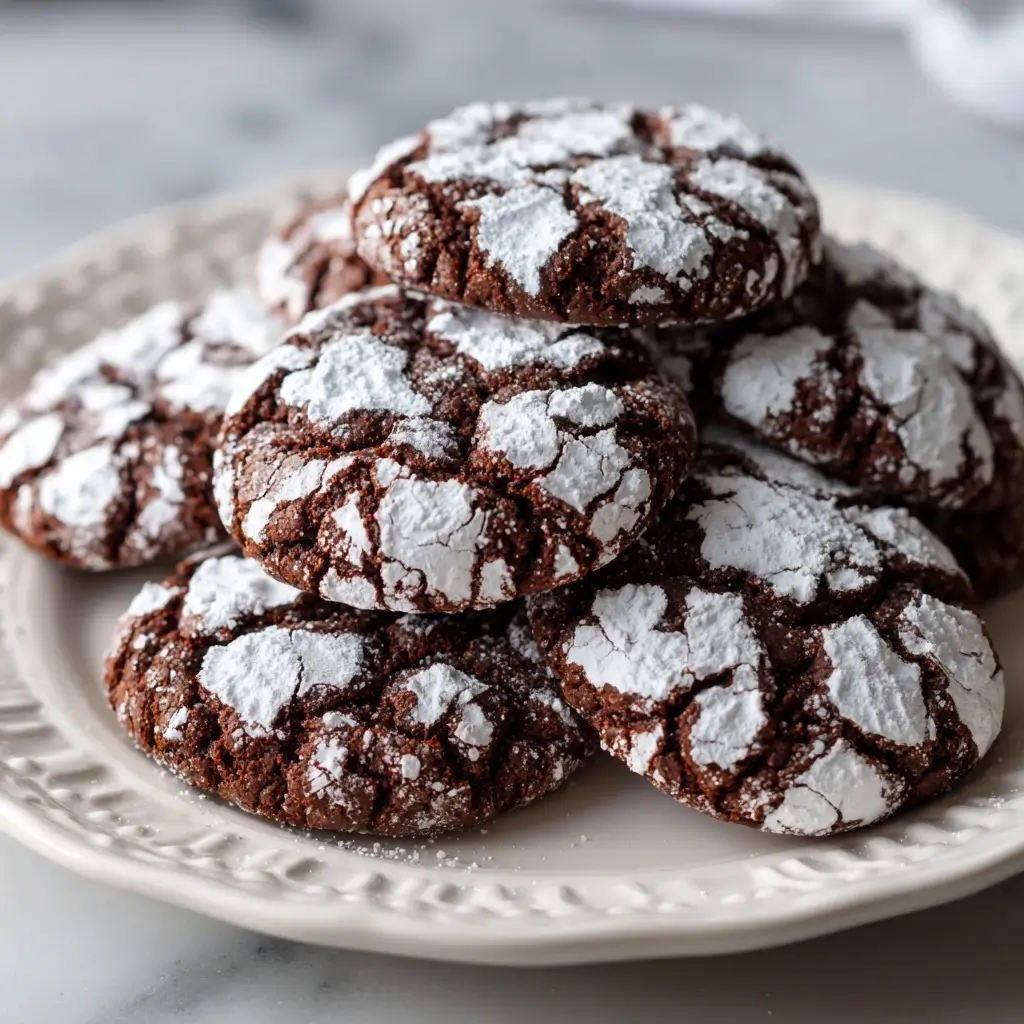
Soft Chocolate Crinkle Cookies: A Decadent Delight with a Crackled Crown
The Irresistible Allure of Soft Chocolate Crinkle Cookies
There’s something magical about the sight of a soft chocolate crinkle cookie—deep, dark brown with snowy peaks of powdered sugar cracked open like glacial crevices, revealing the tender, fudgy interior beneath. These cookies are more than just a treat; they’re a sensory experience. The crisp outer shell gives way to an ultra-moist, cakey-soft center that melts in your mouth with rich cocoa flavor. Perfect for holiday cookie exchanges, cozy winter evenings, or simply satisfying a late-night chocolate craving, soft chocolate crinkle cookies have earned their place as a beloved classic in American baking traditions.
The History: From Humble Beginnings to Holiday Staple
The origins of the chocolate crinkle cookie can be traced back to mid-20th century America, during the rise of home baking and the popularity of boxed cake mixes. Some food historians believe that crinkle cookies were first created as a way to dress up simple chocolate cake mix—rolling the dough balls in powdered sugar before baking gave them an elegant, festive appearance without requiring advanced skills.
By the 1950s and 60s, crinkle cookies began appearing in community cookbooks, women’s magazines, and promotional recipe pamphlets from flour and sugar companies. Their dramatic look and easy preparation made them ideal for holiday baking, school fundraisers, and church potlucks. Over time, bakers refined the recipe using scratch ingredients, emphasizing high-quality cocoa, fresh eggs, and real vanilla for deeper flavor.
Today, soft chocolate crinkle cookies are a staple on Christmas cookie trays across North America and beyond. Their iconic cracked surface—caused by the expansion of the dough during baking while encased in a rigid layer of confectioners’ sugar—has become symbolic of homemade holiday warmth and indulgence.
Ingredients Breakdown: Why Each Component Matters
Understanding the role of each ingredient ensures perfect texture and flavor in every batch:
- Granulated Sugar: Adds sweetness and helps create a slightly crisp exterior. It also aids in browning during baking.
- Brown Sugar (light or dark): Contributes moisture and chewiness due to its molasses content. It enhances the soft texture and adds subtle caramel notes.
- Vegetable Oil or Melted Butter: Fats provide richness and tenderness. Oil yields a softer, more moist crumb, while melted butter adds depth of flavor with a slight dairy note.
- Eggs: Act as binders and add structure. They also contribute to leavening and help the dough hold its shape before cracking in the oven.
- Vanilla Extract: Enhances overall flavor complexity and balances the bitterness of cocoa.
- All-Purpose Flour: Provides the necessary gluten structure to hold the cookie together without making it tough. Too much flour leads to dryness, so precise measuring is key.
- Cocoa Powder (unsweetened, preferably Dutch-process): The star ingredient. High-quality cocoa delivers intense chocolate flavor. Dutch-process is less acidic and smoother; natural cocoa works too but may yield a slightly tangier taste.
- Baking Powder: A small amount lifts the dough slightly, creating a light, cake-like texture rather than a dense truffle-like bite.
- Salt: Balances sweetness and intensifies chocolate flavor. Even a pinch makes a noticeable difference.
- Powdered Sugar (confectioners’ sugar): Rolled onto the dough balls before baking, it forms a crisp, sugary crust that cracks dramatically when the cookie expands. It also gives the cookies their signature snow-dusted appearance.
Step-by-Step Recipe: How to Make Perfect Soft Chocolate Crinkle Cookies
Follow these detailed instructions for bakery-quality results every time.
Ingredients
- 1 ¾ cups (350g) granulated sugar
- ½ cup (100g) packed light brown sugar
- ½ cup (120ml) vegetable oil or melted unsalted butter, cooled
- 4 large eggs, at room temperature
- 2 teaspoons pure vanilla extract
- 2 cups (250g) all-purpose flour (spooned and leveled)
- ¾ cup (75g) unsweetened cocoa powder (Dutch-process recommended)
- 2 teaspoons baking powder
- ½ teaspoon salt
- 1 ½ cups (180g) powdered sugar, for rolling
Directions
- Prepare Your Workspace: Line two large baking sheets with parchment paper or silicone baking mats. Set aside. Preheat your oven to 350°F (175°C).
- Mix Wet Ingredients: In a large mixing bowl, whisk together granulated sugar, brown sugar, and oil (or melted butter) until well combined. Add eggs one at a time, whisking thoroughly after each addition. Stir in vanilla extract. The mixture will be thick and glossy.
- Incorporate Dry Ingredients: In a separate bowl, sift together flour, cocoa powder, baking powder, and salt. Sifting prevents lumps and ensures even distribution of leavening agents.
- Combine Wet and Dry Mixtures: Gradually add the dry ingredients to the wet ingredients, stirring with a wooden spoon or rubber spatula until just combined. Do not overmix—this can lead to tough cookies. The dough will be sticky, thick, and resemble brownie batter.
- Chill the Dough: Cover the bowl with plastic wrap and refrigerate for at least 2 hours, or up to 48 hours. Chilling is essential—it firms up the dough for easier handling, prevents excessive spreading, and deepens the flavor.
- Roll in Powdered Sugar: Place powdered sugar in a shallow bowl. Once chilled, use a cookie scoop (about 1.5–2 tablespoons) to portion the dough. Roll each ball between your palms, then coat generously in powdered sugar, pressing lightly so the sugar adheres. Return coated balls to the tray spaced about 2 inches apart.
- Bake: Bake for 10–12 minutes. The cookies are done when the tops have cracked and appear set, but the centers still feel soft when gently pressed. Avoid overbaking—they continue to firm up as they cool.
- Cool: Let the cookies cool on the baking sheet for 5 minutes before transferring to a wire rack to cool completely. This resting period allows the structure to stabilize.
Tips for Success: Baking Like a Pro
- Use Room Temperature Eggs: Cold eggs can cause the fat (oil/butter) to seize, leading to uneven texture.
- Don’t Skip the Chill Time: Warm dough will spread too much and won’t roll properly in powdered sugar.
- Sift the Cocoa and Flour: Cocoa powder clumps easily—sifting ensures a smooth dough and uniform color.
- Coat Generously in Powdered Sugar: Replenish the powdered sugar in the bowl as needed. A thick coating ensures maximum crackling.
- Uniform Scooping: Use a spring-loaded ice cream scoop for evenly sized cookies that bake consistently.
- Avoid Overbaking: These cookies should be soft inside. At 10 minutes, they’ll look underdone but will set as they cool.
- Cool Completely Before Storing: Trapped heat creates moisture, which can dissolve the powdered sugar coating.
Variations and Customizations: Make Them Your Own
While traditional chocolate crinkles are timeless, feel free to experiment:
- Double Chocolate Crinkles: Fold in ¾ cup of semi-sweet chocolate chips or chunks before chilling.
- Peppermint Crinkles: Add ½ teaspoon peppermint extract along with the vanilla, and roll in crushed candy canes mixed with powdered sugar.
- Gluten-Free Crinkles: Substitute all-purpose flour with a 1:1 gluten-free baking blend. Ensure cocoa powder and sugars are certified GF.
- Espresso Crinkles: Add 1–2 teaspoons instant espresso powder to the dry ingredients to enhance chocolate flavor.
- Orange Zest Crinkles: Add 1 tablespoon finely grated orange zest to the wet ingredients for a citrus-chocolate twist.
- Spiced Crinkles: Add ½ teaspoon cinnamon, pinch of cayenne, and a dash of nutmeg for a Mexican hot chocolate vibe.
- Dipped Crinkles: After cooling, dip half of each cookie in melted white, milk, or dark chocolate for an elegant finish.
- Mini Crinkles: Use a teaspoon-sized scoop for bite-sized versions—bake for 8–9 minutes.
Health Considerations and Nutritional Value
While undeniably indulgent, understanding the nutritional profile helps in mindful enjoyment.
Nutritional Information (Per Cookie, based on 36 cookies):
- Calories: ~180–200
- Total Fat: 8g (mostly from oil or butter)
- Saturated Fat: 3g
- Cholesterol: 25mg
- Sodium: 80mg
- Total Carbohydrates: 30g
- Sugars: 22g (including added sugars from granulated, brown, and powdered sugar)
- Protein: 2g
- Fiber: 1g
- Iron: 10% of Daily Value (from cocoa and flour)
Health Notes:
- Sugar Content: High in added sugars. Consider reducing granulated sugar by ¼ cup if desired, though this may affect texture.
- Portion Control: These cookies are rich—enjoy one or two as a treat rather than eating several in one sitting.
- Allergens: Contains eggs, wheat (gluten), and may contain dairy if using butter. Always check labels if serving those with allergies.
- Storage Impact: Stored in humid environments, powdered sugar may absorb moisture and become sticky—keep in airtight containers with parchment layers.
- Antioxidants: Dark cocoa powder contains flavonoids, which are antioxidants linked to heart health—though benefits are modest given the sugar and fat content.
Frequently Asked Questions (FAQ)
Why didn’t my cookies crack?
Likely causes include insufficient powdered sugar coating, dough not chilled long enough, or overmixing the batter. Ensure you roll the dough balls thickly in sugar and chill thoroughly before baking.
Can I freeze the dough?
Yes! Shape the dough into balls, roll in powdered sugar, and freeze on a tray. Once solid, transfer to a freezer bag. Bake straight from frozen—add 1–2 minutes to baking time.
Can I make these ahead of time?
Absolutely. Baked cookies keep well in an airtight container at room temperature for up to 5 days. You can also freeze baked cookies for up to 3 months—thaw at room temperature.
Why are my cookies flat or greasy?
This usually happens if the dough wasn’t chilled, too much fat was used, or the oven temperature is too low. Double-check measurements and calibrate your oven.
Can I use olive oil instead of vegetable oil?
Yes, but use mild or light olive oil—not extra virgin—to avoid overpowering the chocolate flavor.
Are crinkle cookies supposed to be soft inside?
Yes! The best chocolate crinkle cookies are soft, cakey, and slightly fudgy in the center—not crisp throughout.
Can I use only granulated sugar instead of both granulated and brown?
You can, but brown sugar adds moisture and chewiness. Using only granulated may result in drier cookies.
Why do some recipes use cake mix?
Boxed devil’s food cake mix simplifies the process and often includes cocoa and leavening already blended. However, scratch recipes offer better control over ingredients and flavor quality.
Summary
Soft chocolate crinkle cookies are rich, fudgy delights with a stunning cracked top dusted in powdered sugar—perfect for gifting or treating yourself. With proper chilling, careful rolling, and brief baking, they emerge from the oven with a tender crumb and irresistible chocolate depth.