
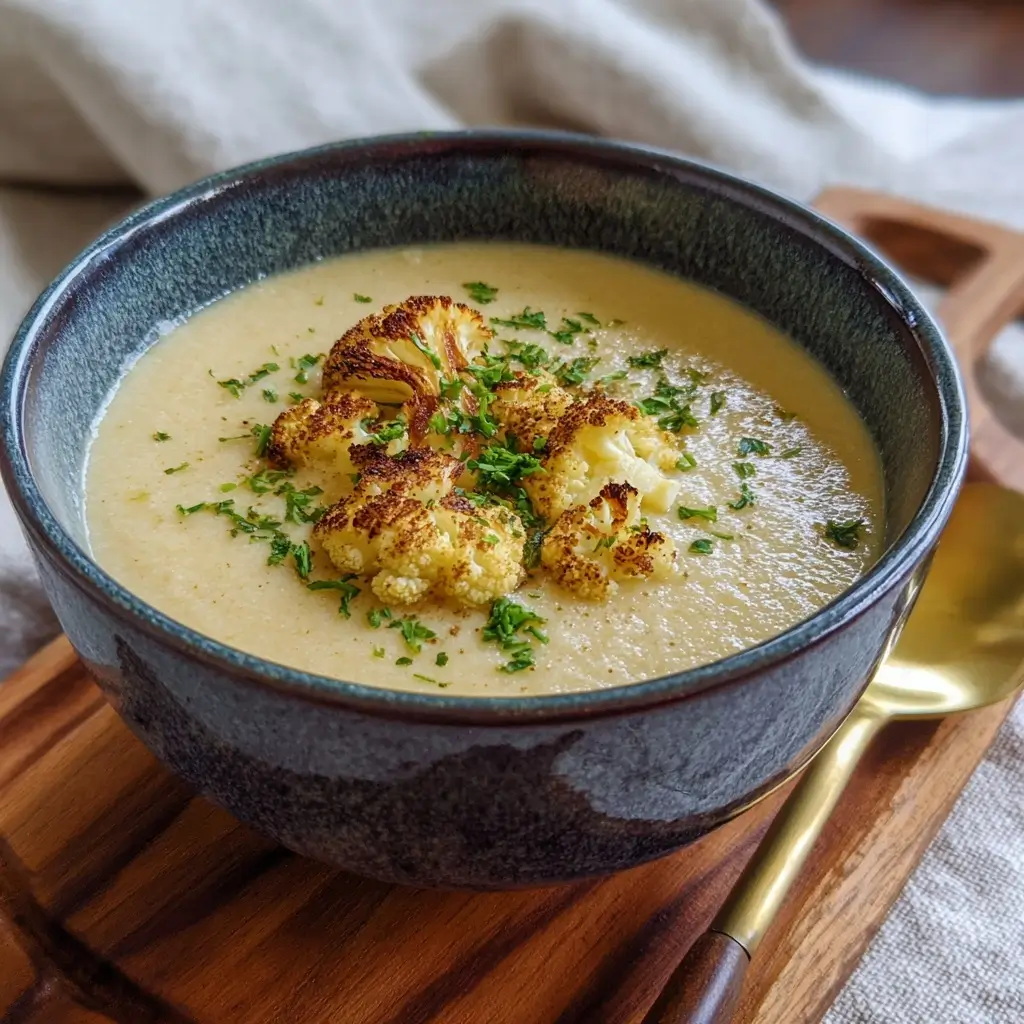
Roasted Garlic & Cauliflower Soup: A Creamy, Comforting Delight
The Roasted Garlic & Cauliflower Soup is a modern culinary masterpiece that marries the earthy sweetness of roasted garlic with the velvety texture of cauliflower. This soup has gained popularity in recent years as part of the clean eating and plant-based movement, but its roots can be traced back to traditional European soups that relied on simple, seasonal vegetables to create deeply satisfying meals. In countries like France, Italy, and Spain, vegetable-based soups have long been staples—think of the French potage, Italian minestrone, or Spanish crema de coliflor. These rustic dishes were born out of necessity, using what was available in the garden or market, yet they evolved into gourmet favorites due to their rich flavors and nourishing qualities.
The History
While cauliflower itself originated in the Mediterranean region around 600 BC, it wasn’t until the 16th century that it gained prominence in European cuisine, particularly in Italy and later in France and England. Garlic, on the other hand, has been used for over 7,000 years, valued not only for flavor but also for its medicinal properties in ancient Egypt, Greece, and China. The combination of these two ingredients in a roasted form didn’t become widespread until the late 20th century, when chefs began experimenting with roasting vegetables to deepen their natural sweetness. Roasting garlic transforms its sharp bite into a mellow, caramelized spreadable delight, while roasting cauliflower brings out nutty, almost buttery notes. The fusion of these roasted elements into a silky soup emerged as a healthier alternative to cream-laden bisques, especially during the low-fat and vegan food revolutions of the 1990s and 2000s.
Today, Roasted Garlic & Cauliflower Soup is celebrated in fine dining restaurants and home kitchens alike for its elegant simplicity and adaptability. It’s often featured on menus as a starter during colder months, symbolizing warmth, comfort, and mindful eating. Its rise in popularity also reflects broader cultural shifts toward plant-forward diets, reduced dairy consumption, and an appreciation for bold yet subtle flavors derived from technique rather than excess fat or salt.
Ingredients Breakdown
The magic of this soup lies in its minimal yet powerful list of ingredients, each contributing a unique dimension to the final dish:
- Cauliflower: The star ingredient. When roasted, cauliflower loses its raw bitterness and develops a delicate, nutty flavor. It also breaks down easily when blended, creating a creamy texture without needing heavy cream.
- Garlic: Roasting whole heads of garlic turns cloves into golden, soft morsels with a jam-like consistency and sweet, umami-rich taste. This depth cannot be achieved with raw or sautéed garlic alone.
- Olive Oil: Used both for roasting and enriching the soup base. High-quality extra virgin olive oil adds fruitiness and helps carry the fat-soluble flavors.
- Vegetable Broth: Forms the liquid foundation. Opt for low-sodium versions to control salt levels, or homemade broth for maximum flavor and freshness.
- Onion: Yellow or white onion adds aromatic sweetness and complexity when sautéed before blending.
- Thyme: Fresh or dried thyme contributes an earthy, slightly floral note that complements both cauliflower and garlic beautifully.
- Nutmeg (optional): Just a pinch enhances the creamy perception and ties the flavors together subtly.
- Lemon Juice: Brightens the soup and balances the richness, preventing it from tasting flat or overly dense.
- Salt and Black Pepper: Essential seasonings applied gradually to layer the taste profile.
- Optional Add-ins: Nutritional yeast (for a cheesy, vegan twist), coconut milk (for added creaminess), or Greek yogurt (for tang and protein).
Step-by-Step Recipe
- Preheat Oven: Set your oven to 400°F (200°C). Line a large baking sheet with parchment paper or lightly grease it.
- Prepare Garlic: Cut the top off one or two whole heads of garlic to expose the cloves. Drizzle with olive oil, wrap tightly in aluminum foil, and place on the baking sheet.
- Roast Vegetables: Remove the leaves and core from one large head of cauliflower and break it into florets. Toss the florets with olive oil, salt, pepper, and a minced shallot or chopped onion. Spread evenly on the baking sheet alongside the wrapped garlic. Roast for 25–30 minutes, flipping halfway through, until golden brown and tender.
- Squeeze Garlic: Carefully open the foil packet and squeeze the soft roasted garlic cloves out into a small bowl. Set aside.
- Sauté Aromatics: In a large pot, heat a tablespoon of olive oil over medium heat. Add diced onion and cook until translucent (about 5 minutes). Add fresh thyme and a pinch of nutmeg, stirring for 30 seconds to release fragrance.
- Add Roasted Ingredients: Transfer the roasted cauliflower and onions to the pot. Pour in 4–5 cups of vegetable broth, starting with 4 and adjusting for desired thickness.
- Simmer: Bring the mixture to a gentle boil, then reduce heat and simmer uncovered for 15–20 minutes to meld flavors.
- Blend Until Smooth: Using an immersion blender directly in the pot, puree the soup until completely smooth. Alternatively, carefully transfer in batches to a high-speed countertop blender. Be cautious with hot liquids—vent the lid and cover with a towel.
- Season and Finish: Stir in the roasted garlic, lemon juice, and additional salt and pepper to taste. For extra creaminess, blend in 2–4 tablespoons of coconut milk or Greek yogurt.
- Serve Warm: Ladle into bowls and garnish as desired (see variations below).
Tips
- Roast Until Deeply Caramelized: Don’t rush the roasting step. The deeper the golden-brown color on the cauliflower, the more complex the flavor will be.
- Use Enough Garlic: One head may seem like a lot, but roasting mellows it significantly. Two heads are even better for intense garlicky richness.
- Control Soup Thickness: Start with less broth—you can always add more after blending. For a thicker, chowder-like consistency, use minimal liquid; for a silky bisque, add up to 6 cups.
- Blend Hot, But Safely: Always allow steam to escape when blending hot soup. Fill the blender no more than halfway and hold the lid firmly with a kitchen towel.
- Acidity Is Key: Lemon juice or a splash of white wine vinegar at the end lifts the entire soup. Taste before serving and adjust accordingly.
- Rest Before Serving: Letting the soup sit for 10–15 minutes after blending allows flavors to settle and improves overall balance.
- Freeze for Later: This soup freezes exceptionally well for up to 3 months. Store in airtight containers with some headspace for expansion.
Variations and Customizations
This recipe is incredibly versatile. Here are some creative ways to personalize your Roasted Garlic & Cauliflower Soup:
- Vegan Version: Stick to olive oil, vegetable broth, and nutritional yeast instead of dairy. Coconut milk adds luxurious creaminess without animal products.
- Dairy-Enhanced: Stir in heavy cream, mascarpone, or crumbled goat cheese just before serving for a decadent touch.
- Spiced-Up: Add a pinch of cayenne, smoked paprika, or curry powder during sautéing for warmth and intrigue.
- Protein Boost: Top with toasted chickpeas, shredded rotisserie chicken, or a poached egg for a heartier meal.
- Smoky Flavor: Roast the cauliflower with a bit of liquid smoke or serve with crumbled bacon or pancetta (if not vegetarian).
- Herb Swaps: Replace thyme with rosemary, sage, or tarragon depending on the season and flavor profile you desire.
- Root Vegetable Blend: Mix in roasted carrots, parsnips, or sweet potatoes for added sweetness and color variation.
- Crunchy Toppings: Garnish with pumpkin seeds, croutons, fried shallots, or microgreens for textural contrast.
- Infused Oil Drizzle: Elevate presentation with garlic-infused olive oil, truffle oil, or chili oil.
- Chilled Version: Cool completely and serve cold as a refreshing summer soup, similar to a vichyssoise.
Health Considerations and Nutritional Value
Roasted Garlic & Cauliflower Soup isn’t just delicious—it’s packed with health-promoting properties:
- Low in Calories, High in Volume: A typical serving (1 cup) contains only 80–120 calories, making it ideal for weight management.
- Rich in Fiber: Cauliflower provides about 3 grams of fiber per cup, supporting digestion and gut health.
- Packed with Antioxidants: Both garlic and cauliflower contain compounds like sulforaphane and allicin, known for anti-inflammatory and potential cancer-fighting effects.
- Supports Heart Health: Olive oil delivers monounsaturated fats, which can help lower bad cholesterol (LDL) when used in place of saturated fats.
- Immune-Boosting: Garlic has long been associated with immune support due to its antimicrobial and antiviral properties.
- Low Glycemic Index: Suitable for diabetics and those managing blood sugar levels, as it doesn’t cause rapid spikes in glucose.
- Gluten-Free and Dairy-Free Options: Naturally compliant with many dietary restrictions when prepared mindfully.
- Vitamin C and K: Cauliflower is a good source of vitamin C (immune function) and vitamin K (bone health and blood clotting).
- Folate and B Vitamins: Supports cellular metabolism and energy production.
However, consider the following if modifying the recipe:
- Adding heavy cream or cheese increases saturated fat and calories.
- Store-bought broths may contain high sodium—always check labels or make your own.
- Those on blood thinners should consult their doctor about high vitamin K intake from cruciferous vegetables.
- Excessive garlic consumption may interact with certain medications (e.g., anticoagulants).
Ingredients
- 1 large head cauliflower, broken into florets
- 2 whole heads of garlic
- 3 tablespoons extra virgin olive oil (divided)
- 1 medium yellow onion, diced
- 1 stalk celery, finely chopped (optional for added depth)
- 1 medium shallot, minced (or substitute with more onion)
- 4–6 cups low-sodium vegetable broth
- 2 teaspoons fresh thyme leaves (or ½ teaspoon dried)
- ¼ teaspoon freshly grated nutmeg (optional)
- Juice of ½ lemon (about 1–2 tablespoons)
- Salt and freshly ground black pepper to taste
- Optional: ¼ cup coconut milk, Greek yogurt, or heavy cream
Directions
- Preheat oven to 400°F (200°C). Prepare two baking sheets or use one large sheet.
- Cut off the top of each garlic head to expose cloves. Drizzle with 1 teaspoon olive oil, wrap in foil, and place on the baking sheet.
- Toss cauliflower florets and shallot with 2 tablespoons olive oil, salt, and pepper. Spread on the same or another baking sheet.
- Roast for 25–30 minutes, flipping once halfway, until cauliflower is tender and golden brown. Remove garlic after 30 minutes and set aside to cool slightly.
- In a large pot, heat 1 tablespoon olive oil over medium heat. Add diced onion (and celery, if using). Sauté for 5–7 minutes until soft and translucent.
- Add thyme and nutmeg, stir for 30 seconds until fragrant.
- Add roasted cauliflower and shallot to the pot. Pour in 4 cups of vegetable broth.
- Bring to a boil, then reduce heat and simmer for 15–20 minutes.
- Squeeze roasted garlic cloves into the pot and discard skins.
- Use an immersion blender to purée the soup until completely smooth. Alternatively, blend in batches in a countertop blender.
- Stir in lemon juice and season with salt and pepper. Add more broth if too thick.
- For creamier texture, stir in coconut milk, yogurt, or cream. Heat gently without boiling if using dairy.
- Taste and adjust seasoning. Simmer for an additional 5 minutes if needed.
- Serve hot, garnished with fresh herbs, cracked pepper, or a drizzle of olive oil.
FAQ
Can I make this soup ahead of time?
Yes! This soup tastes even better the next day as flavors meld. Store in an airtight container in the refrigerator for up to 5 days or freeze for up to 3 months.
Why is my soup grainy?
This usually happens if the soup isn’t blended thoroughly or if there are unroasted bits. Use a high-speed blender and ensure all cauliflower is properly roasted and cooked before blending.
Can I use frozen cauliflower?
Fresh is best for roasting, but you can use frozen if necessary. Thaw and pat dry first, then roast to remove moisture. Texture may be slightly softer.
Is this soup keto-friendly?
Yes! Cauliflower is low in carbs and perfect for ketogenic diets. Avoid adding starchy ingredients and use full-fat coconut milk or cream for richness.
How do I reheat the soup?
Reheat gently on the stove over medium-low heat, stirring frequently. Add a splash of broth or water if it has thickened too much in storage.
Can I omit the lemon juice?
You can, but it’s highly recommended. Lemon juice balances the richness and brightens the overall flavor. Try a small amount first and adjust to taste.
What can I pair with this soup?
Excellent with crusty sourdough bread, a green salad, roasted vegetables, or a grilled cheese sandwich. For a full meal, add grilled chicken or lentils.
Summary
Roasted Garlic & Cauliflower Soup is a luxuriously creamy, nutrient-dense dish that highlights the natural sweetness of roasted vegetables with minimal effort. Hearty yet light, flavorful yet healthy, it’s the perfect comfort food for any season.