
Introduction
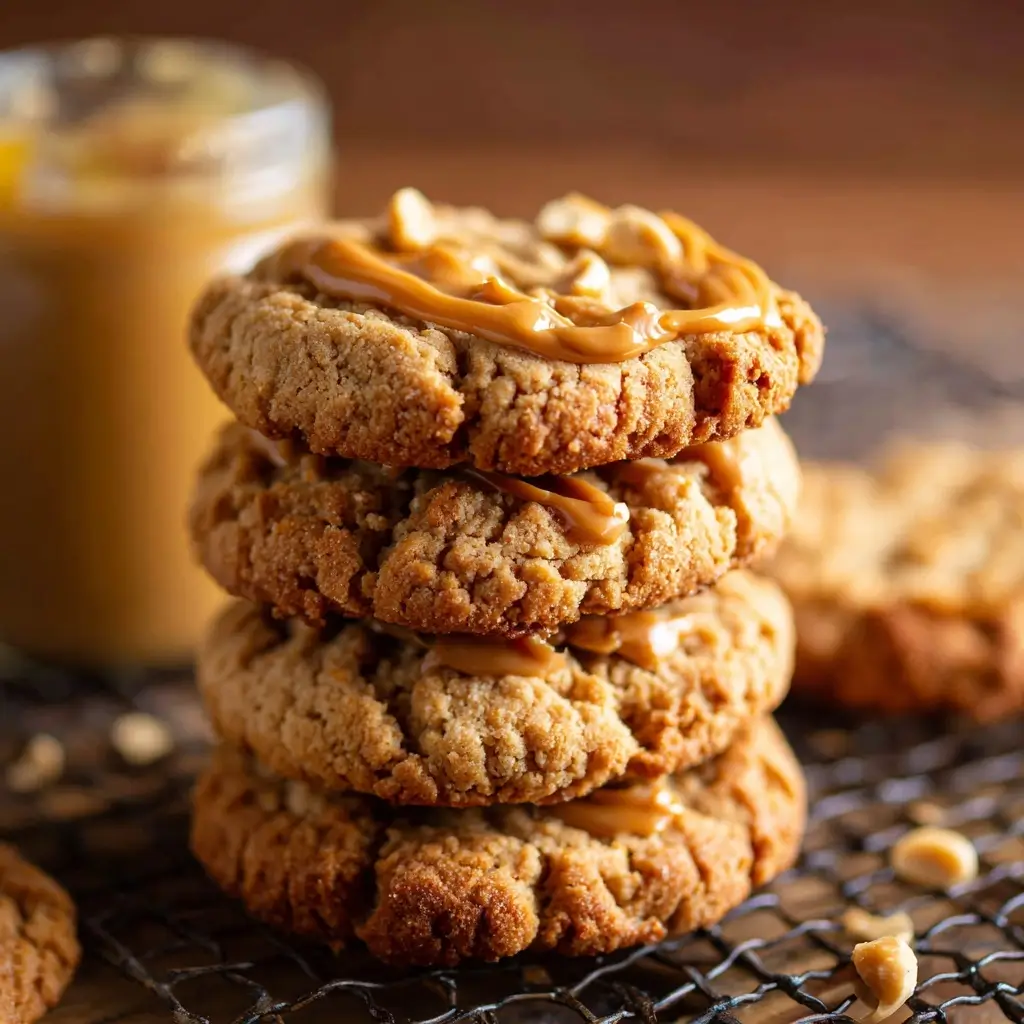
Three-ingredient peanut butter cookies are the epitome of minimalist baking—effortless, satisfying, and deeply nostalgic. With just peanut butter, sugar, and an egg (or a suitable binder), you can create tender, crumbly, warmly spiced cookies that deliver rich nuttiness, subtle sweetness, and that iconic fork-crossed texture—no mixer, no chilling, and often no flour required. These cookies appeal to home bakers of all skill levels: beginners appreciate their forgiving nature; seasoned cooks cherish their speed and versatility; and busy families love how quickly they go from pantry to plate. More than just a shortcut, this recipe embodies the beauty of ingredient integrity—where each component shines without distraction, proving that simplicity, when thoughtfully executed, yields extraordinary flavor and comfort.
The History
The origins of the three-ingredient peanut butter cookie trace back to the early-to-mid 20th century, rooted in both ingenuity and necessity. Peanut butter itself surged in popularity following Dr. John Harvey Kellogg’s 1895 patent for a peanut paste as a nutritious, vegetarian protein source—and by the 1920s, brands like Peter Pan and Skippy had cemented it as a pantry staple across American households. During the Great Depression and World War II, resource-conscious cooks sought recipes requiring minimal, shelf-stable ingredients—flour was sometimes rationed or expensive, eggs were precious, and refined sugar was prioritized for essential uses. Enter the “no-flour” peanut butter cookie: a clever, frugal adaptation that relied on peanut butter’s natural oils and binding proteins, granulated sugar’s structure-building properties, and a single egg for cohesion and lift. Early versions appeared in community cookbooks, women’s magazines like Good Housekeeping, and corporate recipe leaflets distributed by peanut butter manufacturers. Over time, the formula evolved—some added baking soda for slight lift, others swapped brown sugar for depth—but the purest, most enduring iteration remained steadfast at three core components. Today, it endures not only as a retro favorite but as a modern symbol of clean-label baking, aligning seamlessly with gluten-free, low-carb, and whole-foods movements.
Ingredients Breakdown
Each of the three ingredients plays a precise, non-negotiable role—both functionally and sensorially—in creating the ideal cookie:
- Peanut Butter (1 cup / 250g): The foundation, providing fat, protein, emulsifiers, and deep roasted flavor. Opt for smooth, natural-style peanut butter—ideally with just peanuts and salt (no added sugars, hydrogenated oils, or palm oil). Natural varieties separate; stir thoroughly before measuring to ensure uniform fat distribution. Crunchy peanut butter works beautifully for added texture—but may yield slightly less uniform spread. Avoid “no-stir” or “ready-to-spread” types with stabilizers—they inhibit proper spreading and can cause greasiness or dryness. Note: Low-fat or powdered peanut butter will not work—the full fat content is essential for moisture, spread, and binding.
- Granulated Sugar (¾ cup / 150g): Serves multiple critical functions: it tenderizes by inhibiting gluten formation (irrelevant here, but still affects protein networks), caramelizes during baking for golden edges and nuanced flavor, contributes to spread via melting and fluidity, and balances peanut butter’s earthy richness. While brown sugar is a popular variation, classic 3-ingredient versions use white sugar for crispier edges, cleaner sweetness, and reliable structure. Caster (superfine) sugar dissolves faster and yields a slightly more delicate crumb, but standard granulated works perfectly.
- Egg (1 large, ~50g unshelled): Acts as the essential binder and moisture regulator. Its proteins coagulate during baking to hold the cookie together, while its water content steams gently to create tenderness. The yolk adds richness and emulsification; the white contributes structure. For strict vegan preparation, flax or chia “eggs” (1 tbsp ground seed + 2.5 tbsp water, rested 5 min) can substitute—but expect denser, less spread-prone results and a subtle seed aftertaste. Applesauce or mashed banana introduce excess moisture and sweetness, compromising the precise balance—thus disqualifying them from true “3-ingredient” status.
That’s it—no flour, no leavening, no butter, no vanilla, no salt (though a pinch enhances flavor without adding a fourth ingredient). The elegance lies in how these three elements interact chemically: sugar draws moisture from the peanut butter, the egg’s proteins entangle with peanut solids, and heat transforms the mixture into a cohesive, golden-brown delight.
Step-by-Step Recipe
- Preheat & Prep: Position oven rack in the center of your oven. Preheat to 350°F (175°C). Line two large baking sheets with parchment paper or silicone baking mats—do not grease directly, as excess oil can cause uneven browning or sticking.
- Mix Dry & Wet Together: In a medium mixing bowl, combine the peanut butter and granulated sugar. Stir vigorously with a sturdy spatula or wooden spoon for 60–90 seconds until fully blended, glossy, and slightly lighter in color. The mixture will thicken initially, then loosen as the sugar begins to dissolve into the oils. There should be no streaks of dry sugar or separated oil.
- Incorporate the Egg: Add the egg and continue stirring—first slowly to avoid splatter, then with increasing vigor—for another 60 seconds. The batter will transform: it becomes smoother, more cohesive, and slightly fluffy, with a thick, dough-like consistency (similar to soft playdough). It should hold its shape when scooped but remain pliable—not runny nor crumbly.
- Portion & Shape: Use a standard 1.5-tablespoon cookie scoop (or a heaping tablespoon measure) to portion level mounds onto the prepared sheets, spacing them at least 2 inches apart. Gently roll each mound between your palms into a smooth ball—this ensures even baking and classic round shape. Optional but recommended: lightly dampen a fork tines with water or neutral oil (to prevent sticking), then press down firmly on each ball in a crisscross pattern—first vertically, then horizontally—to create the signature ridged design and flatten to ~½-inch thickness.
- Bake with Precision: Place one sheet in the preheated oven. Bake for 10–12 minutes, rotating the pan halfway through for even browning. Cookies are done when the edges are set and lightly golden, the centers appear puffed but no longer wet or shiny, and the surface looks dry with fine cracks beginning to form. They will feel soft to the touch but should not jiggle. Crucially: Do not overbake. These cookies firm up significantly as they cool; pulling them out at the right moment ensures chewy centers with crisp edges.
- Cool Completely: Remove the sheet from the oven and let cookies rest undisturbed for 5 minutes on the hot pan—this allows residual heat to finish setting the structure. Then, using a thin metal spatula, carefully transfer cookies to a wire cooling rack. Let cool completely (at least 20–25 minutes) before handling or storing. This cooling period is non-negotiable: premature lifting risks breakage, and warmth masks the ideal texture contrast.
Tips
- Room Temperature Matters: Ensure peanut butter and egg are at room temperature (65–70°F / 18–21°C). Cold egg can cause the peanut butter to seize or become grainy; cold peanut butter won’t incorporate smoothly and may yield dense, uneven cookies.
- Stirring Technique is Key: Don’t rush the mixing. Under-mixing leaves sugar granules that burn or create holes; over-mixing warms the fats excessively, leading to excessive spread. Aim for a homogenous, slightly aerated batter—not stiff, not soupy.
- Oven Thermometer Required: Most home ovens run hot or cold. An inexpensive oven thermometer ensures accuracy—just 25°F off can mean underbaked globs or burnt edges.
- Sheet Rotation & Positioning: If baking two sheets at once, stagger them on different racks and rotate front-to-back AND top-to-bottom halfway through. Better yet: bake one sheet at a time for optimal air circulation and control.
- Chill for Control (Optional but Strategic): Though not required, chilling shaped dough balls for 15–30 minutes firms the fats and reduces spread—ideal if your kitchen is warm (>75°F) or your peanut butter is very oily. Do not chill longer than 45 minutes; condensation may form and cause sogginess.
- Don’t Skip the Fork Press: Beyond tradition, pressing creates thinner edges (for crispness) and a thicker center (for chew)—plus, it prevents doming. If skipping the press, flatten each ball to exactly ½ inch with your palm first.
- Batch Baking Hack: Scoop and shape all dough balls before baking. Keep extras chilled while the first batch bakes—this maintains consistent size and temperature for even results.
- Rescuing Common Issues: If cookies spread too thin: next batch, chill dough or add 1 tsp of oat flour (technically a 4th ingredient, but minimal); if too thick and cakey: ensure peanut butter is well-stirred and egg is fully incorporated; if greasy: likely used stabilized peanut butter or overmixed.
Variations and Customizations
While the classic trio remains sacred, thoughtful enhancements—without compromising accessibility or simplicity—expand its versatility. All variations below maintain the foundational structure, allowing bakers to tailor based on preference, dietary needs, or pantry availability:
- Sweetness Spectrum: Replace up to half the granulated sugar with packed light or dark brown sugar for molasses depth, chewier texture, and caramel notes. For lower glycemic impact, use coconut sugar (measure 1:1, but note it’s less sweet and yields darker, earthier cookies). Monk fruit or erythritol blends work for keto versions—but reduce total sweetener by 25% and add 1 tsp psyllium husk powder to retain binding.
- Nut Butter Swaps: Almond, cashew, sunflower seed, or tahini can replace peanut butter 1:1—but adjust expectations: almond butter yields milder, slightly drier cookies; sunflower seed butter adds greenish tint and nutty-sweetness (great for allergies); tahini produces sophisticated, sesame-forward, slightly bitter cookies—best with brown sugar and a pinch of cinnamon.
- Flavor Infusions (Zero-Ingredient Additions): Leverage what’s already in your pantry: a ¼ tsp of high-quality vanilla extract (technically a 4th ingredient, but widely accepted), a pinch of flaky sea salt sprinkled on top pre-bake, or ½ tsp ground cinnamon stirred in during mixing. For festive flair, fold in ⅓ cup mini chocolate chips *after* mixing—adding them mid-process preserves the “3-ingredient base” integrity while offering customization.
- Texture Twists: Stir in 2–3 tbsp roasted, unsalted peanuts (chopped or whole) for crunch; fold in 2 tbsp toasted oats or puffed quinoa for heartiness; or top with flaky salt + a single roasted peanut pre-bake for gourmet appeal.
- Dietary Adaptations:
- Gluten-Free: Naturally compliant—just verify peanut butter label (most are GF, but some facility-shared brands warn).
- Vegan: Substitute egg with flax egg (1 tbsp ground flax + 2.5 tbsp water, rested 5 min). Texture will be denser and less spread-prone—flatten slightly thinner and add 1–2 extra minutes baking.
- Keto/Low-Carb: Use powdered erythritol or allulose blend (1:1 sugar replacement), natural creamy peanut butter with <1g net carb per serving, and optionally add 1 tsp xanthan gum for elasticity.
- Protein-Boosted: Stir in 1–2 scoops unflavored collagen peptides or whey isolate (no taste/texture impact at this ratio—still counts as 3-ingredient base).
- Shape & Size Play: Roll into 1-inch balls for bite-sized “peanut butter bites” (bake 7–9 min); press into a greased 8×8 pan and bake as a bar (20–25 min), then cut; or pipe small rosettes for elegant tea-time treats.
Health Considerations and Nutritional Value
A single 3-ingredient peanut butter cookie (approx. 28g, made with natural PB, granulated sugar, and large egg) delivers roughly 140–155 calories, 8–9g fat (mostly unsaturated), 4–5g protein, 12–14g carbohydrates (11–13g sugars), and 0.5–1g fiber. While not a “health food” per se, its nutritional profile holds meaningful advantages over conventional sugar-and-butter-laden cookies:
- No Refined Grains or Flour: Naturally gluten-free and grain-free, making it suitable for those with celiac disease, gluten sensitivity, or low-carb/keto diets. Absence of flour eliminates gluten-related inflammation triggers and rapid blood sugar spikes associated with refined starches.
- High-Quality Plant Protein & Healthy Fats: Peanut butter supplies heart-healthy monounsaturated and polyunsaturated fats, along with arginine (supports vascular health) and resveratrol (antioxidant). The egg contributes complete protein, choline (vital for brain health), and lutein (eye health).
- No Artificial Additives: When using natural peanut butter and pure sugar, you avoid emulsifiers (like mono- and diglycerides), preservatives (BHT/BHA), artificial flavors, and hydrogenated oils linked to systemic inflammation and metabolic dysfunction.
- Lower Glycemic Load Than Many Cookies: With no flour to rapidly convert to glucose, and peanut butter’s fat/protein slowing sugar absorption, blood sugar rises more gradually—especially when paired with brown sugar or low-glycemic sweeteners.
- Considerations & Moderation Notes:
- Sugar Content: Granulated sugar is still added sugar—adhere to WHO guidelines (<25g/day) by limiting intake to 1–2 cookies as part of a balanced diet.
- Sodium: Natural peanut butter contains only a trace of salt (≈50mg/serving); however, conventional brands may contain 150mg+ per serving—check labels if managing hypertension.
- Allergens: Peanuts are a top allergen; always disclose use when serving others. Sunflower seed butter offers safe, nutrient-dense alternative.
- Calorie Density: High in energy-dense fats—mindful portioning supports weight management goals.
Ultimately, these cookies represent “nutrient-dense indulgence”: they provide satiating protein and healthy fats alongside simple sweetness—making them a far more intentional, whole-food-based treat than many commercially baked alternatives.
Ingredients
- 1 cup (250g) smooth, natural peanut butter (ingredients: peanuts, salt only)
- ¾ cup (150g) granulated sugar (organic cane sugar preferred)
- 1 large egg (50g, shell removed, room temperature)
Directions
- Preheat oven to 350°F (175°C). Line two large baking sheets with parchment paper or silicone baking mats.
- In a medium bowl, combine peanut butter and sugar. Stir vigorously with a spatula for 60–90 seconds until smooth, glossy, and fully blended.
- Add the egg and stir for another 60 seconds until the mixture is cohesive, slightly fluffy, and holds together without crumbling.
- Use a 1.5-tablespoon cookie scoop to portion dough. Roll each portion into a smooth ball, then gently flatten to ½-inch thickness using a fork pressed in a crisscross pattern (lightly oil or dampen fork tines first to prevent sticking).
- Place cookies 2 inches apart on prepared sheets. Bake one sheet at a time for 10–12 minutes, rotating halfway, until edges are set and lightly golden and centers look dry with fine surface cracks.
- Let cookies cool on the baking sheet for 5 minutes, then carefully transfer to a wire rack to cool completely (20–25 minutes minimum) before serving or storing.
FAQ
- Can I make these cookies without eggs?
- Yes—with caveats. A flax egg (1 tbsp ground flaxseed + 2.5 tbsp water, rested 5 minutes) is the most reliable vegan substitute. Expect denser, less spread-prone cookies with a slightly earthier note. Chia egg works similarly. Avoid applesauce, banana, or yogurt—they add excess moisture and alter structure irreversibly.
- Why did my cookies spread too much or turn greasy?
- Overmixing (which heats and releases too much oil), using “no-stir” peanut butter with palm oil or hydrogenated fats, baking on a hot or unlined surface, or oven temperature being too high are common culprits. Also check if your peanut butter was inadequately stirred—oil separation leads to inconsistent fat distribution.
- Can I refrigerate or freeze the dough?
- Absolutely. Portioned, unpressed dough balls keep refrigerated for up to 5 days in an airtight container. For freezing, place balls on a parchment-lined tray, freeze solid (2 hours), then transfer to a freezer bag for up to 3 months. Bake straight from frozen—add 1–2 minutes to bake time and press gently with fork while still cold.
- How do I store baked cookies?
- Cool completely, then store in an airtight container at room temperature for up to 1 week. For longer freshness, layer between parchment squares and freeze for up to 3 months. Thaw at room temperature—no reheating needed. Avoid refrigeration unless in extreme heat/humidity, as it promotes condensation and sogginess.
- Can I use crunchy peanut butter?
- Yes—and it adds delightful texture! Just stir thoroughly before measuring to reincorporate oils. Expect slightly less uniform spread and a more rustic appearance. The crunch factor increases near the edges, so flatten slightly more evenly before baking.
- Are these cookies gluten-free?
- Yes—if your peanut butter contains only peanuts and salt (verify label for shared-facility warnings if highly sensitive). No flour or wheat-derived ingredients are used.
- What’s the best peanut butter brand to use?
- Look for jars listing only “roasted peanuts” and optionally “salt.” Top trusted options include Smucker’s Natural, Teddie, Crazy Richard’s, Santa Cruz Organic, or homemade roasted peanut butter. Avoid Jif or Skippy “Regular” due to added hydrogenated oils and sugar.
- Can kids help make these?
- Perfect for little helpers! Measuring, stirring (with supervision), scooping, rolling, and gentle fork-pressing are all age-appropriate tasks. It’s a joyful, tactile, and confidence-building baking experience with immediate, delicious rewards.
- Why do some recipes include baking soda or vanilla?
- Those are variations, not the classic 3-ingredient version. Baking soda adds lift and spread (creating a lighter texture); vanilla enhances aroma. But purists omit both to honor the original’s elemental purity, relying solely on the chemical interplay of peanut butter, sugar, and egg.
- Can I double or triple the batch?
- Yes—but mix in batches of the original ratio. Doubling all ingredients in one bowl risks under-mixing or overheating the fats. Instead, prepare two or three separate 1-cup batches for consistent texture and ease.
Summary
Three-ingredient peanut butter cookies are a timeless, pantry-driven marvel—requiring nothing more than natural peanut butter, granulated sugar, and a single egg to yield irresistibly tender, deeply flavorful treats with crisp edges and chewy centers.
They embody the power of simplicity: no flour, no leaveners, no fuss—just honest ingredients, intuitive technique, and the profound satisfaction of baking that’s as nourishing for the soul as it is accessible for the schedule.